
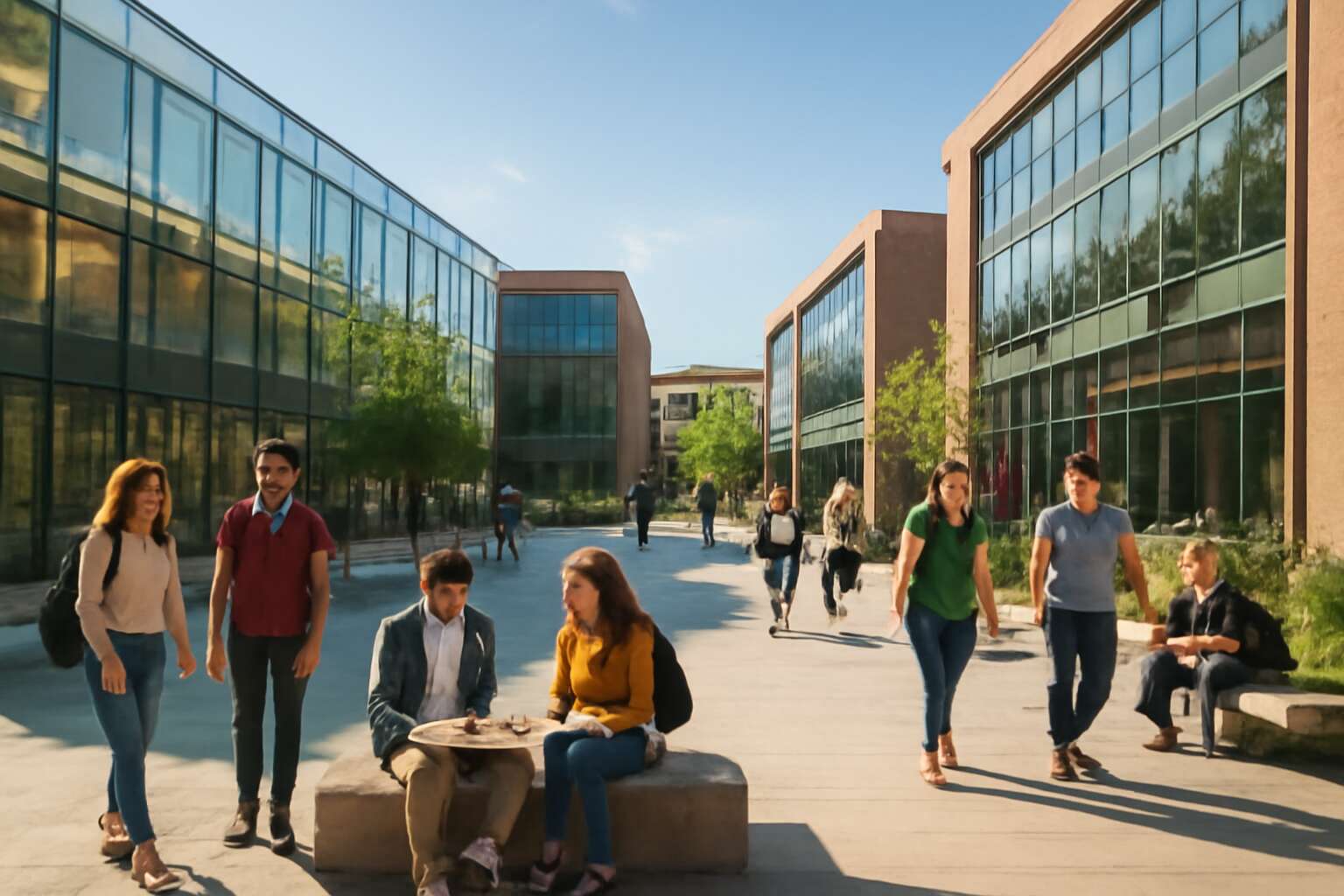
Exploring Tertiary Education Facility Terminology
Foundational campus facility terms
“Spaces shape thought,” a seasoned campus guide notes as morning light spills along brick pathways. The corridors feel like living dictionaries, and every door promises a page in a South African campus story.
Exploring foundational campus facility terms is the heart of any tertiary education facility word hike. This journey doesn’t drown in jargon; it maps simple spaces—libraries, lecture halls, study lounges—so readers move with purpose across a sprawling university or college campus. This is the tertiary education facility word hike in action, turning brick and glass into a navigable language.
- Library and study zones
- Lecture halls and seminar rooms
- Labs, studios, and workshops
- Student hubs, cafeterias, and welfare spaces
In South Africa, these spaces become social theatres where ideas collide, and the architecture quietly witnesses the debate between tradition and innovation.
Infrastructure and space terminology for higher education
More than half of South African students say finding a lecture theatre on the first day feels like a scavenger hunt. That’s where this sector’s real vocabulary comes into play: mapping infrastructure and space terminology without turning readers into map-reading zombies. This is your passport to the tertiary education facility word hike—a playful tour of the built world that makes higher-ed navigation feel like second nature.
Consider these newer terms that quietly shape every campus itinerary:
- Learning commons
- Simulation labs
- Makerspaces and design studios
- Student service hubs
On South African campuses, bricks and glass stage debates between tradition and innovation, while solar canopies whisper about future-proofing. In short, tertiary education facility word hike keeps readers oriented and entertained in a country where classrooms are as lively as the corridors.
Glossary of academic and student services facilities
Welcome to the tertiary education facility word hike. On a campus, the glossary of academic and student services facilities becomes a map for meaning, not merely a directory. Within this journey, these spaces carry signals about support, pace, and belonging. The language shifts as students navigate advising suites, research incubators, and wellness hubs—places where intention meets infrastructure.
- Academic advising suites
- Career services centers
- Research incubators
In this lexicon, every corridor speaks to collaboration, accessibility, and resilience. Buildings become tutors, and service hubs a chorus that keeps progress audible even on exam week!
SEO-friendly facility vocabulary variations
“Space is pedagogy made tangible,” whispers a South African dean, and the tertiary education facility word hike unfurls as a shaded corridor where intention meets infrastructure. The glossary becomes more than a list; it is a map to belonging, guiding students with quiet authority, and it speaks to me in hushed tones.
Exploring synonyms and moodier metaphors, we hear how facility vocabulary variations shape experience. Signage naming a learning commons instead of a library nudges pace, inviting collaboration and care. The tertiary education facility word hike invites readers to hear spaces as tutors in their own right.
Consider these variations that signal purpose on SA campuses:
- Learning commons as crossroads for study and collaboration
- Innovation studios where theory meets prototype
- Wellbeing enclaves that anchor campus life
In this nocturnal liturgy, buildings mentor with quiet authority, guiding steps from lecture to late-night research, and each term becomes a rung on the staircase toward belonging.
Keyword Strategy for Tertiary Education Facility Content
Audience personas for campus facilities content
On campus decisions, the web often outshines glossy brochures. A compelling stat: 78% of prospective students research campus facilities online before visiting. That means pages about libraries, study spaces, and student hubs must be clear and search-friendly on SA campus pages. Enter the tertiary education facility word hike—a deliberate ladder that moves readers from broad campus vibes to specific facilities without jargon clutter!
To tailor this content, sketch audience personas for campus facilities: the curious first-year, the budget-conscious parent, and the time-strapped facilities manager.
- Prospective students researching study spaces
- Parents evaluating transport, safety, and affordability
- Facilities staff seeking precise terminology
With those personas in mind, keyword strategy becomes storytelling—clear, concise, and human, guiding readers to the exact space they need, from a quiet nook to a busy lab.
Semantic keyword clusters around facilities and spaces
Seventy-eight percent of prospective students research campus facilities online before their first campus tour. That reality makes SEO read like a well-mannered invitation: clear, navigable pages that invite curiosity rather than a scavenger hunt for the nearest quiet corner.
The tertiary education facility word hike is a deliberate ladder: readers begin with broad campus vibes and ascend toward precise spaces, using semantic keyword clusters that feel human, not automated. In South Africa, that means terms aligned with local campus life and transport realities.
These semantic clusters anchor navigation and keep content readable for the busy reader.
- Quiet study zones
- Collaborative learning suites
- Practical laboratories
This strategy preserves tone: elegant, a touch witty, and firmly professional, guiding readers from vibe to venue without stumbling over jargon or clichés.
Long-tail keyword ideas for campus infrastructure topics
Some studies suggest 72% of prospective students decide their campus impression within the first five minutes of arrival, and facilities are the deciding factor more often than you’d expect. This is where a flexible, human-friendly approach earns its weight: the tertiary education facility word hike. Readers drift from vibe to venue with ease, guided by semantic paths that feel natural rather than engineered.
Think of it as a ladder: broad campus vibes, then room-by-room specificity, all anchored by long-tail ideas that map to real SA spaces. Long-tail keyword ideas ensure content remains navigable and engaging while still signaling intent to search engines.
- sustainable campus infrastructure design South Africa
- smart classroom technology South Africa universities
- accessible study spaces for students in South Africa
- flexible learning spaces for higher education SA
Competitive keyword analysis in higher education facilities
In South Africa, 72% of prospective students decide their campus impression within the first five minutes of arrival. That makes the built environment—and how it’s described online—a quiet battlefield where words matter as much as brick and glass.
To navigate that terrain, we lean into the tertiary education facility word hike—a ladder from broad campus vibes to room-specific spaces, anchored by human-friendly long-tail ideas that map to real SA spaces. This approach lets readers drift naturally from vibe to venue, and it signals search intent without sounding engineered.
- Align semantic clusters with South African campus spaces for regional relevance and authentic nuance.
- Foster readability while signaling intent through purposeful keyword placement that feels organic.
- Adapt phrasing to local terms and facilities audiences across SA universities for greater resonance.
Like a well-tuned stanza, the strategy marries tactile spaces with semantic sensitivity, inviting visitors to linger on the page and in the mind!
Seasonal and lifecycle keywords relevant to facilities
Brace yourself: 72% of prospective students decide their campus impression within the first five minutes of arrival! In that eerie hush between gate and grand hall, the built environment speaks in stone and steel—and so should the words that welcome them online.
Seasonal and lifecycle keywords anchor the journey from broad campus vibes to intimate, room-specific spaces. They mirror South Africa’s calendar of orientation weeks, exams, and campus maintenance, all threaded through a human-friendly ladder—tertiary education facility word hike—that breathes with local cadence.
- Open day campaigns that capture autumn light
- Maintenance windows aligning with holidays
- Student services fairs during welcome week
Let the phrasing drift from vibe to venue, let terms adapt to isiZulu, isiXhosa, or Afrikaans campuses where needed, and watch readers linger—hungry for the next doorway in tertiary education facility word hike.
Content Topics for Tertiary Education Facility SEO
Campus infrastructure and student experience narratives
South Africa’s campuses awaken like living cathedrals of concrete and glass, where light strolls through airy corridors. A recent survey hints that 68% of prospective students say campus ambience shapes their choice more than glossy prospectuses. This is a tertiary education facility word hike—a narrative thread that threads campus infrastructure with the intimate stories of students and staff. Space becomes voice when walls remember your lectures and late-night coffee rituals!
Content topics for SEO around campus infrastructure and student experience narratives must stay vivid, practical, and human. Highlight accessible design, safety, and technology-enabled learning; celebrate libraries, laboratories, and wellness zones; show how wayfinding and flexible spaces support daily life on campus.
- Smart classrooms and adaptable spaces
- Inclusive facilities and accessible routes
- Wellbeing hubs and social nodes
Learning spaces, classrooms, and labs evolution
South Africa’s campuses are waking like living cathedrals of glass and light, where daylight glides along adaptable spaces that respond to the moment. A recent survey hints that 68% of prospective students say campus ambience shapes their choice more than glossy prospectuses. This is a tertiary education facility word hike, a thread that threads infrastructure with the intimate stories of students and staff.
- Technology-enabled teaching spaces that flex from lecture to lab.
- Inclusive design and accessible routes that ensure every corridor is reachable for all users.
- Wellbeing hubs and social spaces that balance study with rest.
Learning spaces evolve with technology enabling seamless collaboration, from libraries to laboratories, and from wayfinding apps to flexible furniture. On South African campuses, walls remember every lecture and every late-night idea, making the journey feel almost supernatural—yet practical, precise, and human.
Sustainability and facilities management storytelling
Campus ambience shapes choices; 68% of prospective students say it matters more than glossy prospectuses. I’ve walked South African campuses where dawn light folds into glass walls, inviting focused conversations and quiet study—beautiful.
This is a tertiary education facility word hike, weaving sustainability storytelling with facilities management today. The SEO content explores energy strategies, accessibility, and wellbeing as living narrators of every heartbeat on campus.
- Energy efficiency and renewables integrated into campus services
- Water stewardship and waste reduction across research spaces
- Adaptive maintenance planning that respects seasonal cycles
Readers will sense how careful design, local materials, and empathetic maintenance turn ordinary rooms into sanctuaries for study and collaboration—no ounce of pomp, just steady improvement and human connection.
Student support hubs and campus services facilities
Across South Africa’s campuses, student support hubs aren’t just service counters; they’re crossroads where wellbeing meets ambition. A well-tuned services ecosystem—counselling, academic advising, financial aid desks—helps learners navigate study life with dignity, even during busy exam weeks.
Content topics for tertiary education facility SEO flow best when they spotlight campus services as living spaces. This is the tertiary education facility word hike in action, translating classrooms into connected communities.
- Student support hubs and tutoring services
- Library and learning commons with quiet study and group rooms
- Accessibility services and assistive technologies
- Career guidance and internship coordination
These components anchor student life to outcomes, guiding page readers through the essentials without pomp—just reliable, human-centered design. By curating spaces with intuitive wayfinding, warm lighting, and durable materials sourced locally, facilities teams shape a campus that feels like a partner in learning.
Campus accessibility and inclusive facility design
Accessible campuses aren’t afterthoughts; they’re the backbone of learning. ‘A building that welcomes all is a learning tool,’ a campus facilities director once quips. A well-designed path through a building on South African campuses turns a rushed morning into a confident sprint to class, not a scavenger hunt—yes!
In practice, campus accessibility means universal design: clear sightlines, inclusive signage, adjustable furniture, and assistive tech woven into libraries and lecture halls. This is part of the tertiary education facility word hike.
- Wide doorways and ramps for smooth navigation
- Audible and tactile wayfinding cues at key transfer points
- Height-adjustable desks and accessible seating in learning spaces
- Accessible digital interfaces and captioned content
Beyond comfort, inclusive design reduces fatigue, speeds collaboration, and signals respect for every learner. Local materials, warm lighting, and intuitive wayfinding together turn campuses into partners in learning.
On-page Optimization Tactics for Facility Vocabulary
Meta tags, title patterns, and schema for campus facilities
“Content is the doorway; metadata is the hinge,” a campus communications director once said. On-page optimization for campus facility content hinges on precise meta tags, concise yet evocative titles, and thoughtful schema. When readers in South Africa search for space—from libraries to lecture halls—the metadata should mirror that intent. The phrase tertiary education facility word hike anchors the page’s relevance, guiding search engines toward authentic campus vocabulary that respects local nuance and cosmopolitan ambition.
- Meta tags describe the page’s facility type, scope, and location with clarity
- Title patterns follow a consistent structure to reinforce taxonomy across sections
- Schema markup adds Campus or Place properties for accurate local context
Done with care, these elements let both readers and search engines move through the site with natural rhythm, turning a quiet campus page into a living part of the city’s educational landscape.
Internal linking strategies around facilities terms
“Every campus corridor online is a hyperlink waiting to be walked,” a seasoned editor quipped in a faculty lounge. On-page optimization for facility vocabulary blooms when internal linking guides readers through a living campus map. By threading terms from libraries to lecture halls into natural pathways, dwell time and discovery are invited.
Anchor text should echo campus taxonomy—precise, evocative, and locally resonant. Build a hub-and-spoke narrative where Learning spaces, Student services, and Accessibility anchor supporting pages, letting readers wander without getting lost. The tertiary education facility word hike anchors the page’s relevance, guiding search engines toward authentic campus vocabulary with a cosmopolitan edge, especially across South Africa’s campuses where multilingual contexts and city-centered learning spaces shape a unique vocabulary.
- Anchor text mirrors taxonomy and context, avoiding generic phrases
- Interlink content around facilities terms to create cohesive journeys
Rhythms of cadence turn a quiet page into a living part of the university landscape—not a checklist, but a cadence readers feel in their bones.
Readable, accessible content with facility-focused lexicon
On-page optimization for facility vocabulary hinges on readability that feels deliberate, not dense. Clear definitions, varied sentence lengths, and accessible typography invite readers to wander through a living campus map of terms. Each anchor should mirror campus taxonomy while guiding readers along a cohesive journey—a key facet of the tertiary education facility word hike that strengthens both user experience and search visibility across multilingual South African campuses.
- Use descriptive anchor text tied to campus spaces
- Provide definitions near the first use and in glossaries
- Apply structured data for spaces and services
That cadence—clear headings, scannable blocks, and thoughtfully threaded terms—keeps the page buoyant and searchable, a subtle engine behind a credible campus narrative.
Visual content optimization for campus spaces and facilities galleries
Campus galleries across South African campuses thrive when words walk hand in hand with images. A striking stat: readers retain visuals 60% better! When terms are anchored to real spaces, on-page optimization for facility vocabulary hinges on readability that guides the eye through a living campus map. This is a facet of the tertiary education facility word hike that strengthens both comprehension and search visibility.
Snappy tactics that fit naturally into gallery pages:
- Descriptive anchor text tied to campus spaces, mirroring the taxonomy readers already know.
- Accessible alt text and image captions that define each space—lecture halls, labs, study hubs—without jargon overload.
- Lightweight, schema-friendly metadata for spaces and services to help search engines index the visuals.
Keep typography legible, vary sentence length, and ensure images load quickly to keep the visitor moving through the gallery without friction.