
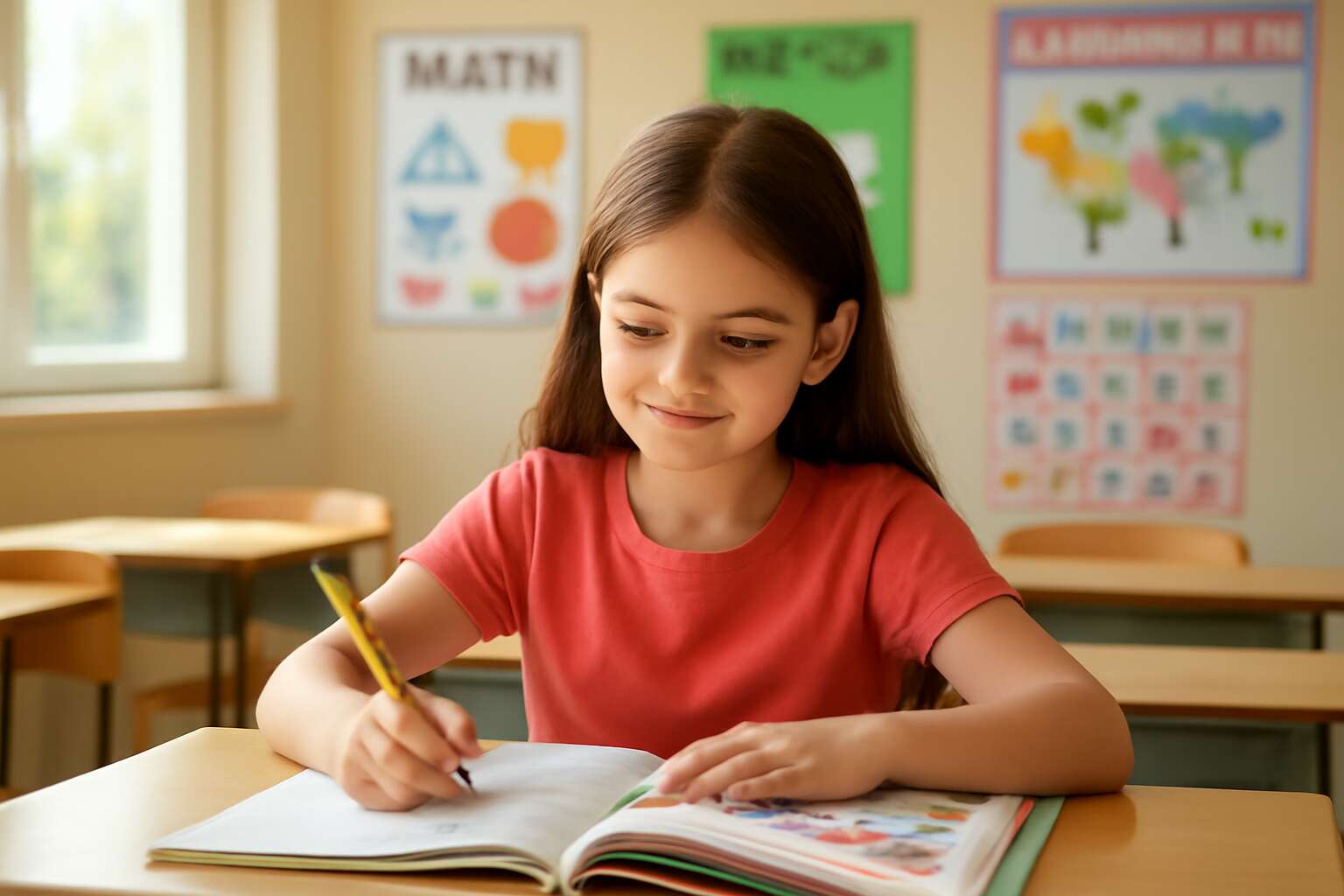
The Value of Education for Girls
Health and well-being improvements for girls
In South Africa, every extra year of schooling for girls lifts futures and communities; World Bank data link longer schooling to higher earnings and healthier choices. This is why education important for girls: it seeds resilience, literacy, and agency that ripple through households and clinics.
- Improved health literacy leads to better nutrition, hygiene, and preventive care
- Greater use of maternal and child health services reduces risk and improves outcomes
- Empowered decision-making lowers vulnerability to early marriage and unsafe practices
In South Africa, education becomes a catalyst for sustained well-being—girls grow into women who advocate for themselves, their families, and their communities. The value of education for girls shapes choices in health, safety, and economic opportunity.
Economic empowerment through education
“Education is the most powerful weapon we can use to change the world,” a line that resonates in South Africa’s classrooms. Each extra year of schooling for girls translates into greater earning potential and broader career options. It also gives them a stake in shaping the local economy. This is why education important for girls—it’s the engine of economic mobility and community resilience in towns and townships alike.
With schooling comes economic empowerment through several channels.
- Higher wages and more stable employment
- Access to entrepreneurship and small business leadership
- Better financial literacy and household budgeting
Educated women reinvest in their families, delay early marriage, and contribute to community development, reinforcing South Africa’s economic fabric.
Education as a driver of gender equality
In South Africa, classrooms are laboratories for social change. UNESCO reports that every extra year of schooling for girls can lift lifetime earnings by up to 20%, a statistic that lands with force in towns and townships across the country. This is why education important for girls, not only for personal growth but for community vitality.
Education acts as a catalyst for gender equality by widening possibility, sharpening critical thinking, and empowering girls to claim leadership in schools, workplaces, and communities. Key pathways include:
- Shaping confident decision-makers who challenge stereotypes
- Expanding representation in classrooms, boards, and policy spaces
- Strengthening negotiation and collaborative problem-solving in households
When learning travels beyond literacy, it reshapes family dynamics and community norms. Girls with schooling transcend barriers, advocate for safety, and participate in civic life, turning classrooms into engines for social progress rather than quiet corners of possibility.
Education’s role in breaking poverty cycles
A year of schooling can lift a girl’s lifetime earnings by up to 20%, a statistic that lands with force in South Africa’s townships—why education important for girls. This path acts as a ladder out of poverty, widening choices and resilience for families who depend on a single paycheck.
Beyond income, education breaks poverty cycles by building financial literacy, stability, and the confidence to pursue higher training. Its ripple effects extend through households and communities.
- Lower intergenerational poverty risk through steady earnings
- Improved budgeting, savings, and resource management in families
- Expanded access to skilled jobs and local leadership
In South Africa, every educated girl strengthens her community’s future, turning classrooms into engines of local renewal and opportunity!
Impact on Families and Communities
Raising household income and economic growth
In South Africa, education for girls is more than a personal win—it unlocks the family’s future. When girls stay in school, households see steadier incomes and smarter budgeting, turning every rand into a seed for growth. A community elder once whispered, “Education is the coin that buys resilience.” This ripple travels like a quiet current of magic through homes and streets, revealing why education important for girls, because the ripple reaches every corner of the village.
- Increased household purchasing power for essentials and savings
- Growth of local small businesses as educated girls enter the workforce
- Stronger community institutions with girls taking leadership roles
Beyond the home, the economy grows as skilled girls enter the workforce and start businesses, lifting local markets and sparking investment. This is why education important for girls and why communities choose to invest in classrooms over the next harvest.
Better health, nutrition, and child outcomes
A grandmother in a rural village whispers, “Education is medicine that never wears out.” In South Africa, that prescription shows up in healthier homes and brighter futures. This is why why education important for girls matters to families—it translates schooling into better health, steadier care, and hopeful outcomes for the next generation.
- Better child health and nutrition through informed caregiving
- Higher vaccination rates and preventive care in early years
- Smarter meals and routines that support growth and learning
Beyond the home, educated girls inspire change in the broader community—schools, clinics, and local networks gain momentum as girls take leadership roles. The ripple continues, stitching resilience into every street and market.
Intergenerational benefits and role models
Nelson Mandela’s words still echo: ‘Education is the most powerful weapon you can use to change the world.’ In South Africa, education weaves through homes, clinics, and schools, turning curiosity into confidence and classrooms into catalysts for change. This is why ‘why education important for girls’ matters to families—it translates schooling into better health, steadier care, and hopeful futures for the next generation.
- Learning habits passed from mothers to daughters, lifting daily routines and study time
- Shifts in expectations that place schooling as a shared family value
- Visible role models who lead in schools, clinics, and local networks
Intergenerational benefits ripple through households and communities, creating role models that inspire siblings, cousins, and neighbours, and turning education into a lasting inheritance that outlives a single generation.
Community development and leadership opportunities
In South Africa, education for girls extends beyond classrooms; it reshapes households and neighborhoods, turning small moments into shared aspirations. This is a living demonstration of why education important for girls, because every lesson ripples through families, lifting daily routines and future plans with renewed confidence.
When girls access learning, communities gain builders of commonwealth: mothers who mentor others, sisters who lead youth programs, and neighbors who coordinate health and sanitation drives. These shifts foster durable development and inclusive leadership that touches clinics, schools, and local councils.
- Equitable community planning and volunteer networks
- Youth mentorship and talent pipelines for local businesses
- Health outreach and preventive care led by educated women
Horizons expand, and stories of classrooms become maps toward thriving communities.
Barriers to Girls’ Education and How to Overcome Them
Cultural norms, early marriage, and safety concerns
Globally, 130 million girls are out of school, and South Africa is not immune to that erosion of opportunity. Understanding why education important for girls matters becomes personal when you witness a girl choosing a longer, riskier route to class over comfort. The stakes feel existential.
Barriers crystallize into three interwoven forces: cultural norms that quietly prescribe a girl’s place; early marriage that cements a life away from classrooms; and safety concerns that turn the road to school into a gauntlet. To tilt the balance, communities can embrace dialogue, strengthen school safety, and demand accountability.
- Community-led dialogue that shifts entrenched norms
- Safe, well-lit transport and secure school facilities
- Clear protections and enforcement against child marriage
This is why the question of why education important for girls persists in policy rooms and living rooms alike; education becomes the moral compass through which we measure progress, resilience, and shared humanity.
Access to safe schools, transport, and inclusive environments
Patches of South Africa still treat the journey to school as a test of endurance rather than a rite of ascent. The hurdles are not only physical—blazing heat, poorly lit routes, unsuitable uniforms—but cultural norms quietly prescribing a girl’s place. This is why education important for girls—an urgent touchstone for dignity and progress. When classrooms and corridors feel unsafe or out of reach, potential shrinks.
Three broad barriers stand out, and they demand attention that is both humane and practical:
- Inclusive classrooms and curricula that validate girl voices
- Psychosocial support and safe spaces on campus
- Flexible, equitable approaches to attendance and assessment
Overcoming these frictions fosters access to safe schools, transport, and inclusive environments—conditions that invite every girl to show up as her best self, not as a statistic. In South Africa and beyond, the arc of education bends toward justice when barriers are named and addressed.
Financing education: scholarships and affordable options
Barriers to financing education are gatekeepers that decide who enters the classroom. In South Africa, even small costs—uniforms, textbooks, transport—can push girls off the path to schooling. When funds tighten, chores and paid work shadow study time. This is a moment when why education important for girls rings true—education is a shield against poverty, a beacon of dignity, and a door to leadership. Without funds, potential shrinks.
Smart financing turns fear into momentum. Scholarships and affordable options are not charity; they are investments in futures that outlast a single term.
Consider these practical routes that work across communities:
- Full or partial scholarships for merit or need
- Bursaries and government or NGO subsidies
- Transport and uniform fee waivers
- School fee financing with low-interest plans
- Employer-backed sponsorships and community fundraising pools
When financing gaps close, girls can attend with confidence and focus, and families see schooling as an enduring gift rather than a fleeting hope.
Policy reforms, advocacy, and funding mechanisms
“Education is the most powerful weapon you can use to change the world,” Nelson Mandela once declared. In South Africa, why education important for girls resonates as a blueprint for resilience—barriers loom, yet every classroom can redefine futures.
Barriers to girls’ education persist across the country—poverty, safety concerns, long distances, and biases that close doors.
- Policy reforms that remove fees and ensure safe transport
- Subsidies and funding mechanisms for uniforms, books, and school materials
- Community-led programs that provide mentorship and safe study spaces
To overcome them, policy reforms, advocacy, and funding mechanisms must converge. This is why education important for girls remains a beacon—shaping policy, empowering families, and unlocking leadership.
Practical Strategies to Promote Girls’ Education
Scholarships, free tuition, and financial support
In South Africa, understanding why education important for girls fuels smarter policy and stronger communities. Every extra year of schooling can boost a girl’s future earnings by up to 20%, and keeping girls in class strengthens families and local economies. Education is a multiplier, not a luxury—especially where resources are scarce and opportunity is the true currency.
- Scholarships for girls in underserved communities.
- Free tuition programs through government and NGO partnerships.
- Financial support for transport, books, and uniforms.
By aligning these strategies with local schools and leaders, we move from intent to visible impact in every classroom. It’s practical, scalable, and rooted in a simple truth: when girls learn, communities rise.
Teacher recruitment, female role models, and safe learning spaces
Nelson Mandela’s refrain—”Education is the most powerful weapon which you can use to change the world”—rings true in South Africa, where classrooms can rewrite destinies. Practical strategies focus on teacher recruitment, female role models, and safe learning spaces that endure beyond the school gates.
- Teacher recruitment and development: attract skilled teachers who reflect communities; invest in mentorship and ongoing training to retain female educators.
- Female role models: connect girls with women leaders through guest talks, mentoring, and partnerships with local organizations.
- Safe learning spaces: robust safeguarding, safe transport options, and inclusive facilities that support every learner.
Ultimately, why education important for girls becomes a living standard in every classroom, turning aspiration into daily progress and strengthening South Africa’s futures.
Leveraging technology: online learning and remote access
“Education is the most powerful weapon which you can use to change the world.” In South Africa, corridors dark with history give way to bright screens where girls log on and futures awaken. This is why education important for girls, because it turns quiet potential into measured courage and community uplift.
To harness technology, schools can:
- offer offline-friendly platforms so learners study without constant internet
- prioritize mobile-first content in local languages
- build mentor networks via video calls pairing girls with women leaders
- deploy solar-powered devices and local hubs for safe remote access
In the theatre of learning, these digital strategies become lifelines—quiet, persistent, transformative. The future of South Africa’s girls is written online as much as in brick and mortar, and opportunity bends toward equality.
Community engagement, parental involvement, and awareness campaigns
In South Africa, roughly one in five girls leaves school before finishing secondary education, a haunting statistic that echoes through hopeful futures. This is more than a gap in transcripts—it’s a fissure in destinies. This quiet reflection begs the question: why education important for girls remains essential to our communities’ resilience and to the renewal of our shared tomorrow.
- Host community dialogues in local languages at schools, libraries, and churches
- Offer parental involvement nights with childcare and translated resources
- Partner with local media to run awareness campaigns featuring girls’ mentors
These strategies weave a tapestry of participation—turning talk into trust and attendance into opportunity, then lighting the path where every girl’s potential can rise from the shadows to claim her place in the classroom and beyond.
Partnerships with governments, NGOs, and the private sector
Every girl kept in school is a spark that lights a village’s future. Partnerships between government, NGOs, and the private sector unlock scalable routes to schooling. In South Africa, this means shared funding, aligned standards, and community-driven accountability that translate policy into classrooms, buses that run on time, and safe learning spaces.
- Integrated funding models that blend public budgets with NGO grants and private-sector CSR.
- Joint capacity-building for teachers and school leaders in underserved districts.
- Shared data platforms to monitor attendance, outcomes, and transport needs.
- Mentor networks and industry internships that connect students to future opportunities.
These collaborations translate policy into practice, moving from good intentions to measurable progress in schools and communities. For communities and policymakers alike, this reveals why education important for girls and how every partnership can change a life.