
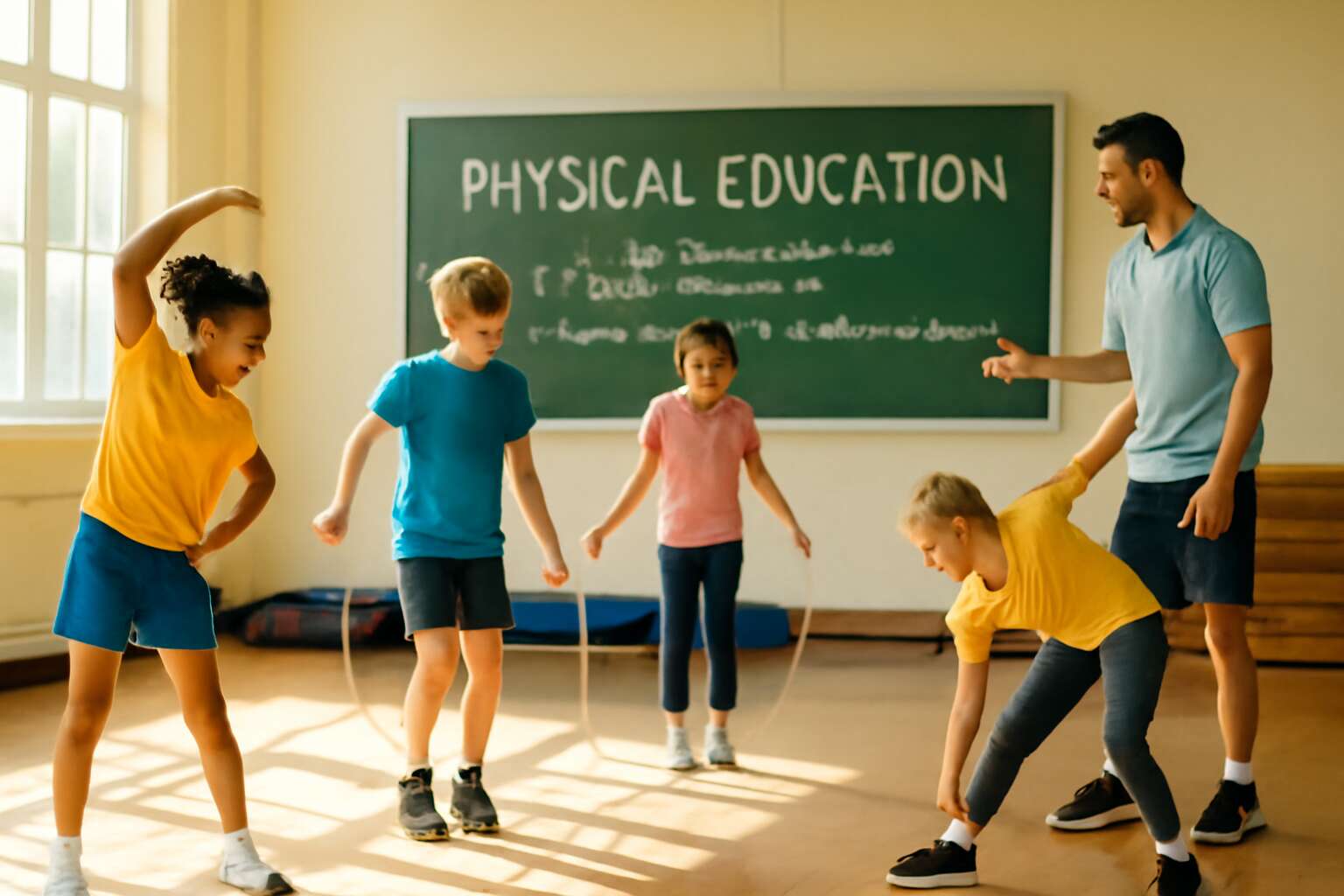
Foundational Concepts in Physical Education
What is Physical Education and Why It Matters
South Africa’s schools pulse with sport and possibility, yet a global truth lingers: one in three children does not meet daily activity guidelines. The question “What is physical education and why it matters?” unfolds as a guiding thread through every lesson. physical education ke important question hums in corridors and gymnasia, as educators seek to convert fleeting play into durable movement literacy.
Foundational concepts in physical education begin with movement literacy—coordination, spatial awareness, and the fluency to adapt skills across contexts. Add motor skill development, health-related fitness, and psychosocial growth, and the subject becomes a gateway to resilient bodies and focused minds.
- Movement literacy
- Skill progression
- Inclusive participation
Within a South African context, PE transcends drills; it forges identity, community, and lifelong wellbeing, weaving physical capacity with cognitive curiosity and emotional balance. That is the physical education ke important question that educators carry into the next generation.
Historical Development of Physical Education in Schools
Across South Africa, one in three children does not meet daily activity guidelines — a sobering reminder of PE’s purpose and potential! Historically, PE moved from drill-driven routines to a holistic, inquiry-based approach that centers movement literacy, coordination, spatial awareness, and the fluency to transfer skills across settings. Add motor skill development, health-related fitness, and psychosocial growth to the mix.
These pillars crystallize into a practical framework for classrooms across the country:
- Movement literacy
- Skill progression
- Inclusive participation
Within the South African context, this evolution keeps the door open to identity, community, and lifelong wellbeing—a reflection of the physical education ke important question that educators carry forward.
Key Terms and Definitions in PE
Movement literacy is the key that unlocks a lifetime of wellbeing—and in South Africa, classrooms are increasingly treating it as the essential foundation of learning. Foundational Concepts in Physical Education now center on clearer terms and shared understandings that keep students moving, thinking, and growing. The physical education ke important question guides how teachers define success, move beyond drills, and connect PE to everyday life.
- Movement literacy — the fluency to initiate, adapt, and transfer skills across settings.
- Motor skill development — refining coordination, timing, and control through progressive challenges.
- Health-related fitness — cardio, strength, and flexibility components linked to daily wellbeing.
- Psychosocial growth — confidence, collaboration, and resilience fostered through active participation.
These terms act as navigational beacons in SA schools, guiding inclusive practice, safety, and lifelong wellness within a diverse learner population.
Physical Literacy: The Core Idea
Movement literacy is the key to lifelong wellbeing—it’s more than sport, it’s a daily toolkit for moving, thinking, and growing. In South Africa, foundational concepts in physical education foreground clear terms and shared understandings that keep learners moving across classrooms, courts, and fields!
Foundational concepts show up in the curriculum. Consider these guiding pillars:
- Movement literacy: fluency to initiate, adapt, transfer skills across settings
- Motor skill development: refining coordination, timing, and control through progressive challenges
- Health-related fitness: cardio, strength, flexibility linked to daily wellbeing
- Psychosocial growth: confidence, collaboration, resilience through active participation
This framework speaks to the physical education ke important question by defining success beyond drills and linking PE to everyday life, inclusive practice, and lifelong wellness for a diverse learner population in SA.
Roles of PE Teachers and Stakeholders
A recent SA education report notes that active learners show measurable gains in concentration and wellbeing. Foundational concepts anchor PE not in drills, but in everyday movement, with a shared language across classrooms, courts, and fields. The physical education ke important question frames success as movement literacy, motor development, fitness, and psychosocial growth—practical outcomes that travel beyond the gym into daily life!
Foundational concepts translate into roles:
- PE teachers cultivate movement literacy, design progressive challenges, and model inclusive practice.
- School leaders allocate time, space, and resources to sustain daily activity and lifelong fitness.
- Parents and communities partner to extend movement beyond school hours.
- Learners co-create inclusive spaces that value effort, resilience, and teamwork.
In South Africa, this triad—concepts, roles, and shared responsibility—keeps learners moving, thinking, and growing with dignity and curiosity.
Benefits and Outcomes of Physical Education
Physical Health Benefits for Students
PE isn’t just activity—it shapes a lifetime. A healthy body fuels a curious, productive mind, and in South African schools that link shows up in attendance, focus, and performance. This is the physical education ke important question for educators: how do PE programs translate into real, lasting health and learning outcomes? “Healthy bodies, sharp minds,” says a PE advocate—powerful! Regular movement strengthens heart and lungs, builds bone density, and helps maintain a healthy weight. It also lowers stress and boosts mood, making classrooms calmer and more productive.
Benefits unfold across the body and classroom.
- Cardiovascular fitness and endurance
- Stronger muscles, bones, and better posture
- Improved concentration, mood, and self-regulation
Outcomes go beyond physiology: students gain focus, collaboration skills, and healthier routines that carry into daily life. When physical education is well designed, the benefits echo in attendance, confidence, and academic readiness.
Mental Health and Cognitive Benefits
The physical education ke important question isn’t about who scores a goal, but whether movement translates into calmer classrooms and sharper thinking. In South African schools, regular activity reduces stress, improves sleep, and bolsters mood—setting students up for better mental health and daily resilience.
- Enhanced executive function and cognitive flexibility
- Improved attention, working memory, and rapid decision-making
- Better self-regulation and teamwork that spill into study habits
Mentally and academically, PE yields a calmer, more curious learner. Students report less anxiety before tests and more sustained concentration during lessons, turning physical education into a reliable engine for learning momentum.
Academic Performance and Classroom Readiness
In classrooms across South Africa, physical education is more than play—it’s preparation. Regular activity sharpens memory, attention, and stamina, translating into steadier participation and quicker task completion. For teachers, these gains show up as fewer off-task moments and smoother transitions between subjects, creating a calmer, more focused learning rhythm.
- Improved on-task behavior during lessons
- Quicker transitions and stronger classroom management
- Longer attention spans and healthier study routines
The link between movement and academic performance isn’t accidental. PE builds executive function, planning, and teamwork that spill into group projects and daily routines. This is the physical education ke important question for schools: does movement boost learning momentum in the classroom? In South Africa, the outcomes include calmer classrooms, sharper attention, and better readiness for exams.
Lifelong Fitness Habits and Prevention
Movement is memory in motion. Lifelong fitness habits are not mere echoes of gym class; they are architecture carved in quiet corridors where heartbeat and habit align. In South Africa, physical education plants discipline, teaching learners to endure effort and make movement a daily ritual. The physical education ke important question threads through every drill: can these patterns shield bodies from a lifetime of sedentary risk while forging resilience?
From steady participation and safe technique to small victories, PE becomes a shield against future ill health and a forge for growth. Prevention guides practice, weaving fitness into daily life and community rhythm.
- Lifelong fitness habits forged through routine and joy
- Prevention of obesity and chronic disease via regular activity
- Community engagement and inclusive participation across ages
In the South African context, these outcomes extend beyond the school gates, shaping healthier futures for generations.
PE Curriculum, Standards, and Assessment
National and State Standards in Physical Education
Curriculum in physical education follows national guidelines while respecting provincial frameworks, mapping learning outcomes to motor skill development, fitness, and health literacy. In South Africa, this means a coherent progression from basic movement to strategic activity choices, with assessment embedded in units rather than saved for exams.
Standards spell out what learners should know and be able to do, from safe participation to lifelong activity habits.
Assessment blends ongoing observation with performance tasks and fitness benchmarks, ensuring feedback informs planning.
- Performance tasks
- Rubrics and criteria
- Formative feedback
- Fitness benchmarks
To streamline this, many schools align a clear progression to CAPS and provincial policy, ensuring equity across schools and communities.
That is the physical education ke important question answered—by weaving curriculum, standards, and assessment into classrooms where learners move with purpose and measure real growth.
Curriculum Design: Units, Progressions, and Outcomes
Curriculum design in physical education hinges on units that spiral from basic movement to strategic activity choices, like a spring garden where skills bloom. I align units with CAPS and provincial policy, guaranteeing equity across schools. Units weave motor skill development with fitness literacy and health knowledge, with assessment woven in from day one rather than saved for a final test. Clear progressions trace learner growth across terms, so participation stays safe and outcomes feel meaningful.
- Units
- Progressions
- Outcomes
Within this framework, performance tasks evaluate real-world capabilities; rubrics articulate criteria; formative feedback guides next steps; fitness benchmarks anchor progress in physical capacity. The physical education ke important question drives our design—how do we structure units so every learner grows with purpose, clarity, and joy? This approach translates into tangible growth for South African learners, turning gym class into a chorus of movement and insight, and supporting lifelong participation.
Assessment Methods: Formative and Summative
“Standards without assessment are aspirations!” says a veteran PE coordinator. The physical education ke important question guides how districts translate CAPS and provincial policy into lively, equitable practice across South Africa, weaving units with motor skill growth, fitness literacy, and health knowledge.
Assessment methods balance formative insight with summative accountability. Formative approaches flow through day-by-day tasks, rubrics, and timely feedback that anchor learning. Summative tasks crystallize growth via performance rubrics and capstone units, giving a clear snapshot of what learners can demonstrate in real-world settings.
- Formative: ongoing observation, self/peer assessment, quick checks for understanding
- Summative: end-of-unit performance tasks, standard rubrics, portfolio reviews
When aligned with CAPS and provincial standards, these methods ensure equity across schools and meaningful progress for every learner, turning gym time into purposeful movement.
Inclusion and Adaptation in PE
Curriculum is motion, not memoranda. In South Africa, a veteran PE voice reminds us: “Curriculum should move with the child.” That energy reshapes classrooms into studios of possibility, where movement becomes a language for every learner and every story.
By aligning curricula with CAPS and provincial standards, we craft units with clear outcomes, audacious progressions, and adaptive assessment practices. Inclusion and adaptation turn barriers into bridges—language access, varied tempos, and targeted supports ensure all students participate, demonstrate motor skills, and reveal fitness knowledge. This addresses the physical education ke important question: how do we design a curriculum that honors CAPS while inviting every learner to move?
To keep this promise, consider these practices:
- Adaptive assessment methods with diverse task formats
- UDL-informed unit design and multilingual feedback
- Equipment modifications and inclusive activity choices
Technology and Data in PE
Movement is a language that asks for more than muscle—it’s a dialogue between body, classroom, and community. The physical education ke important question unfolds in South Africa this way: how do we honor CAPS while inviting every learner to move? We design curricula that listen; standards stay clear, and assessment is adaptable—so progress isn’t memorized but witnessed.
- CAPS-aligned, outcomes-driven units
- UDL-informed feedback and multilingual reporting
- Data-driven assessment technology and dashboards
With these tools, PE becomes both a science and a story—where teachers read patterns, adjust supports, and celebrate every student’s motion.
Practical Implementation and Challenges
Classroom Management and Safe Practice
Practical implementation in South African schools demands more than a syllabus; it requires space, equipment, and well-timed routines. We balance inclusive activity options, local conditions, and safety while keeping students moving with purpose. This is the physical education ke important question we face as we align activities with available resources, ensuring every pupil can participate with confidence.
Classroom management and safe practice hinge on clear routines and proactive coaching. In practice, that means consistent signals, organized stations, and ongoing risk assessment. The classroom becomes a living field where students from the dusty rural yards to the bright gym try, fail, recover, and learn together in a low-risk environment.
Equipment, Facilities, and Accessibility
In South African schools, practical implementation is the crucible where vision meets soil and weather! Equipment must be durable and portable, spaces must convert into safe arenas, and routines must adapt to shifting timetables. This is the physical education ke important question faced when aligning aspirations with what schools can physically provide.
Consider these realities to keep activity flowing:
- Equipment that is durable, transportable, and scalable for indoor and outdoor use
- Facilities that protect learners from sun and rain, with clear storage and safe play surfaces
- Accessibility of spaces and times, so that all learners can participate without excessive barriers
Across settings, the challenge translates into improvisation—turning scarce spaces into responsive stages where learners experiment, recover, and move with growing confidence despite constraints.
Engagement Strategies for Diverse Learners
In many SA schools, PE is where creativity meets constraint, and the clock is always ticking. As one seasoned coach likes to remind us: “There’s no gym? Then make the space.” Practical implementation hinges on durable, portable equipment, sun-and-rain safe spaces, and routines that bend with timetable twists. Accessibility and safety remain non-negotiable, turning limited spaces into lively practice zones rather than empty tee times.
This is the physical education ke important question—how do we engage diverse learners without stigmatizing or stalling progress?
Strategies that respect diversity:
- Station-based tasks with clear progressions for different abilities
- Options emphasizing cooperation over competition for hesitant learners
- Peer mentoring and leadership roles to build confidence
- Incorporating culturally relevant activities to boost relevance
By improvising within constraints, educators keep learners moving, learning, and laughing—even on stormy days.
Policy, Funding, and Community Involvement
“There’s no gym? Then make the space,” a seasoned SA coach reminds us, and the gym becomes a courtyard, a corridor, or a sunlit corner of a playground. Physical education here is a craft, turning constraint into energy, with learners at the center.
Policy, funding, and community involvement shape what’s possible. Schools must align with national and provincial PE standards, ensure safety, and design activities that fit crowded timetables. Funding remains a gatekeeper, but partnerships turn small budgets into meaningful opportunities.
Community involvement breathes life into PE: volunteer coaches, after-school clubs, and open days invite families into movement. The aim isn’t extra gear, but durable, portable equipment and weatherproof spaces.
Amid policy talk and community energy, the question persists: the physical education ke important question—how do we keep every learner moving with dignity and joy, regardless of space or budget?