
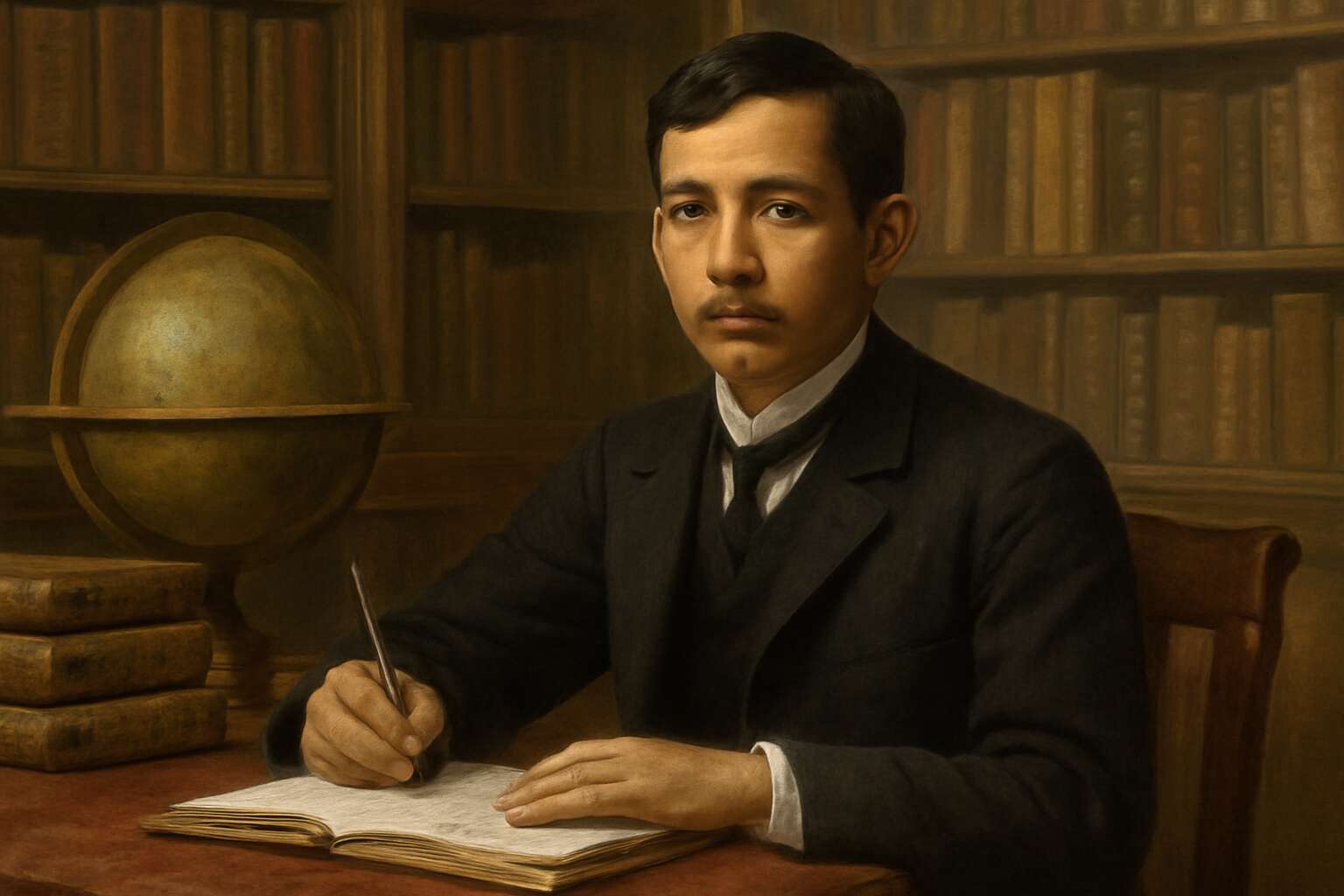
Overview of Rizal’s Tertiary Education
Ateneo Municipal de Manila: Early higher education and foundation studies
Manila in the 1870s offered no campus myth, just a disciplined classroom and a horizon of ideas. Rizal entered Ateneo Municipal de Manila at a formative moment, and by earning a Bachelor of Arts there he wrote a concrete chapter in the tertiary education of rizal. The Jesuit-led curriculum blended languages, moral philosophy, and logic, shaping a mind that would critique empire with clarity. For South African readers, that liberal arts grounding echoes in pathways here!
Within those early higher education years, the foundation studies laid a sturdy scaffold for future scholarship. The program nurtured linguistic prowess, self-discipline, and reflective inquiry.
- Latin and Spanish literacy that unlocked European universities
- Foundations in philosophy and science that encouraged critical thinking
- Character formation and civic purpose guiding his reformist outlook
These formative experiences illuminate how Rizal’s education began in Manila and extended across continents, shaping a life devoted to learning and humane curiosity.
University of Santo Tomas: Medical studies and reasons for transfer
“The youth is the hope of our fatherland,” Rizal wrote, and his medical studies at the University of Santo Tomas marked a turning point in the tertiary education of rizal. The Manila campus offered a disciplined path that fused science with awakening civic purpose, setting him on a lifetime of inquiry.
Inside UST, the medical program delivered foundational anatomy, physiology, and patient-facing routines, yet the horizon stretched beyond Manila. The decision to transfer sprang from a drive for broader clinical exposure, access to cutting-edge European medical science, and a cosmopolitan intellectual milieu.
- Desire for broader clinical opportunities
- Access to advanced European medical science
- Exposure to a cosmopolitan intellectual milieu
For South African readers, this pattern—rooted in local training expanding toward global networks—resonates with modern pathways toward specialized expertise.
In Madrid and beyond, Rizal refined his craft, studying in laboratories and clinics that Manila’s walls could not match. The transfer to Europe, a deliberate pivot, remains a keystone in the tertiary education of rizal and in the narrative of Filipino intellectual ascent.
Madrid and Barcelona: European medical education and transition
Rizal’s Madrid and Barcelona years reframed his medical quest, turning patient care into a pan-continental study. In Madrid, he entered lectures, dissecting rooms, and clinical rounds that Manila could scarcely replicate. In Barcelona, he matched European laboratories with a cosmopolitan patient load, sharpening diagnostic instincts and research curiosity. This pivot—this European schooling—marks a keystone in tertiary education of rizal, expanding a practice beyond borders and stitching a wider network into his medical education!
- Hands-on clinical exposure in European wards
- Access to contemporary European medical science
- Participation in a cosmopolitan medical community
That global path still informs how Rizal’s education shaped his ascent and the Filipino intellectual project. For South African readers, this European transition mirrors today’s drive toward global medical networks.
Paris and Heidelberg: Advanced training in ophthalmology and research
“Knowledge travels faster than borders,” a crisp note that frames Rizal’s Paris and Heidelberg years. In Paris, he entered renowned ophthalmology clinics, absorbing precise diagnostic methods; in Heidelberg, he pursued rigorous research that fused patient care with laboratory inquiry.
- Hands-on clinical exposure in European wards
- Access to cutting-edge ophthalmic labs and instruments
- Cross-cultural collaboration with European mentors and peers
That dual-city focus broadened his sight beyond Manila’s limits, stitching a cosmopolitan approach into his medical education. This phase completes the tertiary education of rizal.
Key Institutions in Rizal’s Tertiary Education
Ateneo Municipal de Manila
In 1870s Manila, a single Ateneo classroom could tilt the balance of a budding nation. Rizal walked those halls with a hunger for language, debate, and self-critique. The Ateneo Municipal de Manila offered a rigorous liberal arts path—Latin, rhetoric, philosophy—where curiosity became disciplined reasoning. The Jesuit approach didn’t just feed facts; it trained a habit of questioning that would echo through his later essays and letters!
- Classical languages and logic sharpened his prose
- Civic conscience nurtured through ethical discourse
- Exposure to global ideas via Latin texts and scholarly debates
That formative period at Ateneo anchors the broader narrative of the tertiary education of rizal—an initiation that linked local schooling to a cosmopolitan arc of study. The emphasis on disciplined inquiry and eloquence helped Rizal articulate ideas that could challenge oppression and inspire reform.
University of Santo Tomas
University of Santo Tomas stands as Asia’s oldest extant university, a sturdy cradle for Rizal’s tertiary education. Its curriculum wove Latin grammar, philosophical debates, and early scientific inquiry into a rigorous tapestry. Dominican mentors sharpened talk into precise argument, a habit that would echo in his essays and letters. For South African readers tracing global education networks, UST’s resilience is a punchy reminder that institutions can shape ideas across oceans.
- Latin mastery and liberal arts as the intellectual backbone
- Vast libraries and the wealth of classical and contemporary texts
- Mentorship that fused ethics with rigorous inquiry
UST’s environment didn’t just train a student; it helped stage Rizal’s cosmopolitan outlook within the broader arc of the tertiary education of rizal.
Universidad Central de Madrid
Madrid’s lecture halls welcomed a restless intellect, turning patient notes into philosophy. At Universidad Central de Madrid, Rizal pursued medicine with a lens trained on detail—anatomy dissections, ocular pathology, and the clinical rigor European universities prized. The environment braided austere discipline with lively debate, sharpening the eye for social reform as much as for surgical technique! For readers in South Africa tracing global education networks, that Madrid chapter serves as a vivid prototype of how institutions connect continents.
Within that citadel of study, three hallmarks stood out:
- Rigorous clinical training in ophthalmology and general medicine, grounded in European methods
- Libraries brimming with classical and contemporary texts in multiple languages
- Mentors who fused ethics with rigorous inquiry and patient-centered care
These threads weave into the broader narrative of the tertiary education of rizal, showing how a Madrid chapter fed his cosmopolitan outlook and prepared him for transcontinental dialogue.
University of Barcelona
Barcelona’s medical halls hosted Rizal during a crucial orbit of his European education, where a restless mind learned to map human anatomy with social vision. The University of Barcelona stitched together rigorous lectures, anatomy theater, and hospital rounds that turned theory into tact. Within the tertiary education of rizal, Barcelona taught him to marry precise clinical technique with a compassionate gaze.
Three hallmarks marked his Barcelona chapter:
- Hands-on clinical exposure at Barcelona teaching hospitals
- Libraries stocked with Latin, Spanish, French, and Catalan texts
- Mentors who blended ethics with patient-centered inquiry
That Barcelona phase fed Rizal’s cosmopolitan view and prepared him for the transcontinental dialogue that followed in Paris and Heidelberg. Its blend of rigorous science and humane care became a touchstone for how we think about medical education today.
Paris and Heidelberg for specialized medical training
Paris, the epicenter of continental medicine, offers a masterclass for South African readers as Rizal sharpened his surgical eye under the University of Paris’s Faculty of Medicine. The Pitié-Salpêtrière and Hôtel-Dieu offered hands-on clinics where theory met patient care, and ophthalmology wards turned case notes into practical wisdom.
In Heidelberg, Ruprecht-Karls-Universität opened a deeper path into research-forward training, with the University Eye Clinic shaping his approach to optics and pathology. The environment paired rigorous observation with humane inquiry, a blueprint for a clinician who reads a patient’s life in a glance.
- Heidelberg University Hospital (Augenklinik)
- Dedicated ophthalmology research labs and medical libraries
These experiences underpin the tertiary education of rizal.
Subjects and Disciplines in Rizal’s Tertiary Education
Medicine and clinical training
In the crucible of Rizal’s medical journey, the mind learns what the body endures and vice versa. The tertiary education of rizal threaded science with conscience, turning lectures into an inner compass. “Medicine is the art of relieving pain with humanity,” a mentor whispered, and Rizal absorbed that creed.
Subjects and disciplines framed his understanding of illness and healing. Core sciences laid the scaffolding, while clinical training poured life into the theory—bedside rounds, diagnoses, and therapeutic decisions sharpened judgment. I picture the balance of theory and bedside practice as Rizal moved from classroom to patient. Ethics and research shaped how he approached evidence and responsibility.
Key subjects included:
- Anatomy and Physiology
- Pathology and Microbiology
- Pharmacology and Therapeutics
- Clinical Medicine and Diagnostics
- Surgical Skills and Procedures
- Public Health and Epidemiology
- Medical Ethics and Research Methods
This blend prepared him for holistic care and moral responsibility, a thread that resonates in medical education today.
Ophthalmology specialization
Rizal’s ophthalmology journey wasn’t a mere lecture sprint; it was a surgical waltz where precision met compassion. In the eye theater, 90% of discovery happens in the patient’s story, the rest under the slit lamp. His tertiary education of rizal in this specialty stitched patient welfare to razor-sharp technique, turning curiosity into sight-saving practice.
- Ophthalmic diagnostics and imaging
- Cataract and refractive surgery principles
- Glaucoma management and optic care
- Pediatric ophthalmology and binocular vision
Beyond lenses and lasers, Rizal absorbed research methods and ethics to ensure evidence-based care. Those subjects, part of his higher medical journey, still ripple through South African clinics today, reminding us that sight is saved as much by listening as by laser power.
Philosophy, arts, and humanities
In classrooms where debates spark brighter than whiteboards, Rizal’s arts and humanities curriculum reads like a compass for a science-minded soul. It wasn’t math alone that sharpened his sight—poetry, philosophy, and humane storytelling sharpened ethical vision.
Within the tertiary education of rizal, languages, literature, philosophy, and art history braided together with ethics and civic responsibility. This holistic frame taught him to listen before leaping, to read cultures as carefully as graphs, and to translate curiosity into caring action.
For South Africa’s diverse patient communities, that philosophy still resonates: empathetic dialogue, rigorous scholarship, and a reverence for human dignity guide modern care beyond the clinic.
Languages and literature studies
“The youth is the hope of our nation,” a refrain attributed to Rizal, hums through his imagined classrooms as he walked between libraries and salons. Within the tertiary education of rizal, languages and literature studies braided together with philosophy to form a compass for a science-minded soul. He learned to listen before leaping, and to translate curiosity into caring action.
From this pulse, the subjects and disciplines in Rizal’s language arts took shape as a living map:
- Spanish and English literature
- Tagalog and Latin linguistic traditions
- Poetry, letters, and essays
- Translation and transcription
- Rhetoric and performance
- Cross-cultural storytelling
Today, for South Africa’s diverse patient communities, these strands of language and literature studies translate into empathetic dialogue, rigorous scholarship, and a respect for human dignity—qualities that guide care beyond the clinic. I hear this heritage shaping conversations that heal.
Scientific inquiry and research approach
In Rizal’s imagined classrooms, curiosity wears a compass and language wears a map—this is the tertiary education of rizal, a living toolkit for minds that listen before they respond.
Subjects and disciplines braided into this curriculum form a living map of inquiry: language arts, philosophy, and science-minded methods converge in careful reading, reflective writing, and responsible experimentation.
- Ethical inquiry that centers human dignity
- Cross-cultural interpretation and translation as method
- Systematic observation and evidence-based thinking
For South Africa’s diverse patient communities, this approach translates into empathetic dialogue, rigorous scholarship, and care that respects story and science in equal measure—proof that the tertiary education of rizal remains a living model for interdisciplinary practice.
Impact and Legacy of Rizal’s Tertiary Education
Influence on Rizal’s writings and civic advocacy
Rizal’s journeys through Europe’s academies bred a writing ethos rooted in humane scrutiny and fearless inquiry. The tertiary education of rizal expanded his sense of justice, teaching him to weigh evidence, debate ideas, and imagine reforms that would elevate both mind and community.
From classrooms to print, his experience yielded distinct legacies.
- Seeding a distinctive voice for reform in his novels and essays
- Honing a scientific approach that sharpened his social critique
- Fostering a cross-cultural empathy that underpins civic advocacy
In South Africa’s classrooms, Rizal’s example nudges readers toward informed citizenship and lifelong learning!
Impact on Philippine educational ideals and reforms
Rizal’s maxim—’The youth is the hope of our nation’—isn’t mere rhetoric. The tertiary education of rizal did more than train a physician; it stitched a reformist habit into his bones, traveled from Manila to Madrid and back as a living curriculum. In Manila’s academies and European study rooms he learned to weigh evidence, question dogma, and listen across cultures. South African readers can sense in this a call to cultivate curious minds and civic courage in our classrooms.
The legacy of this journey flows into Philippine educational ideals and reforms as a steady insistence on evidence, ethics, and curiosity. From public schools to universities, Rizal’s example nudged curricula toward scientific inquiry, critical debate, and global literacy—principles that still guide reform-minded planners today. For South African audiences, it offers a resonant reminder that a robust higher learning culture is not a luxury but a backbone of democratic life.
Lifelong learning and international exposure
Modern-day teaching and interpretation of Rizal’s education
Rizal’s classroom trail isn’t merely history—it’s a living syllabus that still guides modern campuses, including South Africa’s universities. The maxim he championed—“The youth are the hope of our nation”—remains a compass for those shaping tertiary education of rizal, urging curricula that blend science, art, and civic purpose.
In practice, these ideals are visible in three enduring strands:
- Interdisciplinary inquiry crossing science, humanities, and languages
- Global exposure that mirrors Rizal’s international training
- Civic advocacy embedded in project-based learning
Across the region, educators reinterpret Rizal’s education as a call to cultivate adaptable intellects—curious, ethical, and ready to act. Some say his curiosity still walks the corridors of learning, guiding modern teaching that fuses discovery with responsibility. His tertiary journey becomes a lens for present-day curricula.