
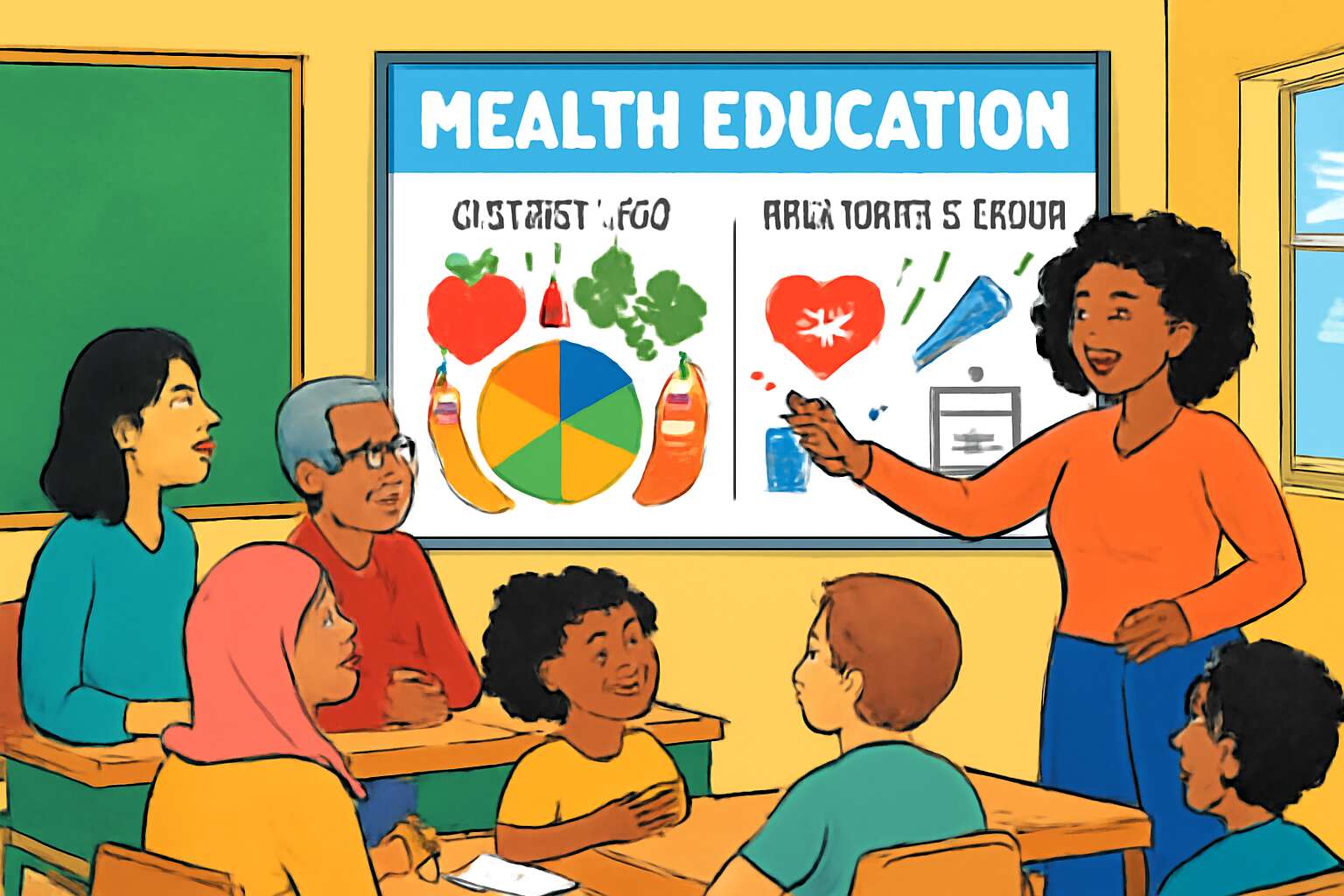
The Importance of Health Education
Health Education’s Role in Personal Wellness
One in three South Africans struggles to access reliable health information, a reality that stings more than a bad medicine side effect. Health education isn’t a dusty syllabus; it’s practical wisdom shaping daily choices, from meals to movement. So, how is health education important? It turns knowledge into habit, and habit into resilience, even when clinics are miles away or info is messy online!
In personal wellness, health education builds a toolkit you carry everywhere:
- Informed food choices that respect culture and budget
- Early symptom recognition for timely care
- More confident navigation of health services and resources
When knowledge becomes daily practice, energy rises, stress falls, and the body thanks you with fewer sick days and more birthday candles. That is the quiet power of personal wellness through education, a South African reality worth celebrating.
Health Education and Public Health Outcomes
Public health outcomes rise when education becomes a living map, a loom weaving science into daily acts from cradle to elder years. In South Africa, it is estimated that communities with strong health education see up to a 25% uptick in preventive service uptake. Health education translates knowledge into stories that communities can act on, turning facts into steady habits and shared norms.
The question, how is health education important, lies at the heart of policy and practice: when literacy grows, vaccination acceptance rises, screening expands, and care navigation becomes second nature.
Public health outcomes hinge on knowledge becoming action across communities:
- Better disease prevention through informed choices
- Early detection and timely treatment
- Richer trust and collaboration with health services
Educational Methods and Innovations in Health Education
Health education grows by design, not just by chance. A 25% uptick in preventive service uptake in some South African communities shows what happens when learning travels from clinic to kitchen table. The question how is health education important guides not just what we teach but how we teach: it drives durable behavior, not fleeting awareness!
Educational methods and innovations today fuse accessibility with clarity. Stories, visuals, and plain language reach across languages and incomes. In South Africa, mobile messages, community radio, and peer-led groups meet people where they are, while online modules and simulations build confidence before a clinic visit.
- Peer education and community health workers as trusted messengers
- Storytelling, visuals, and plain-language materials
- Mobile-first tools, radio campaigns, and short, digestible courses
These approaches empower people to navigate care, ask the right questions, and sustain healthy routines beyond a single campaign.
Economic and Social Value of Health Education
In some South African communities, a 25% uptick in preventive service uptake shows the power of turning learning into action. The economic and social value of health education stretches beyond clinics into households, schools, and workplaces, lifting entire communities toward steadier livelihoods and brighter futures. The question how is health education important guides not just what is taught but how it travels—across languages, ages, and incomes—so knowledge becomes everyday practice.
Because learning becomes behavior, health education translates into tangible gains: productive workplaces, safer communities, and families better equipped to navigate care with confidence. Consider the dividends as a shared resource that grows with access, trust, and clear communication:
- Increased productivity and reduced absenteeism in the workplace
- Lower long-term healthcare costs through prevention and early detection
- Stronger social equity as information travels from clinics into kitchens, classrooms, and communities
When learning travels through a community, health becomes a collective asset that supports both everyday resilience and national ambition.