
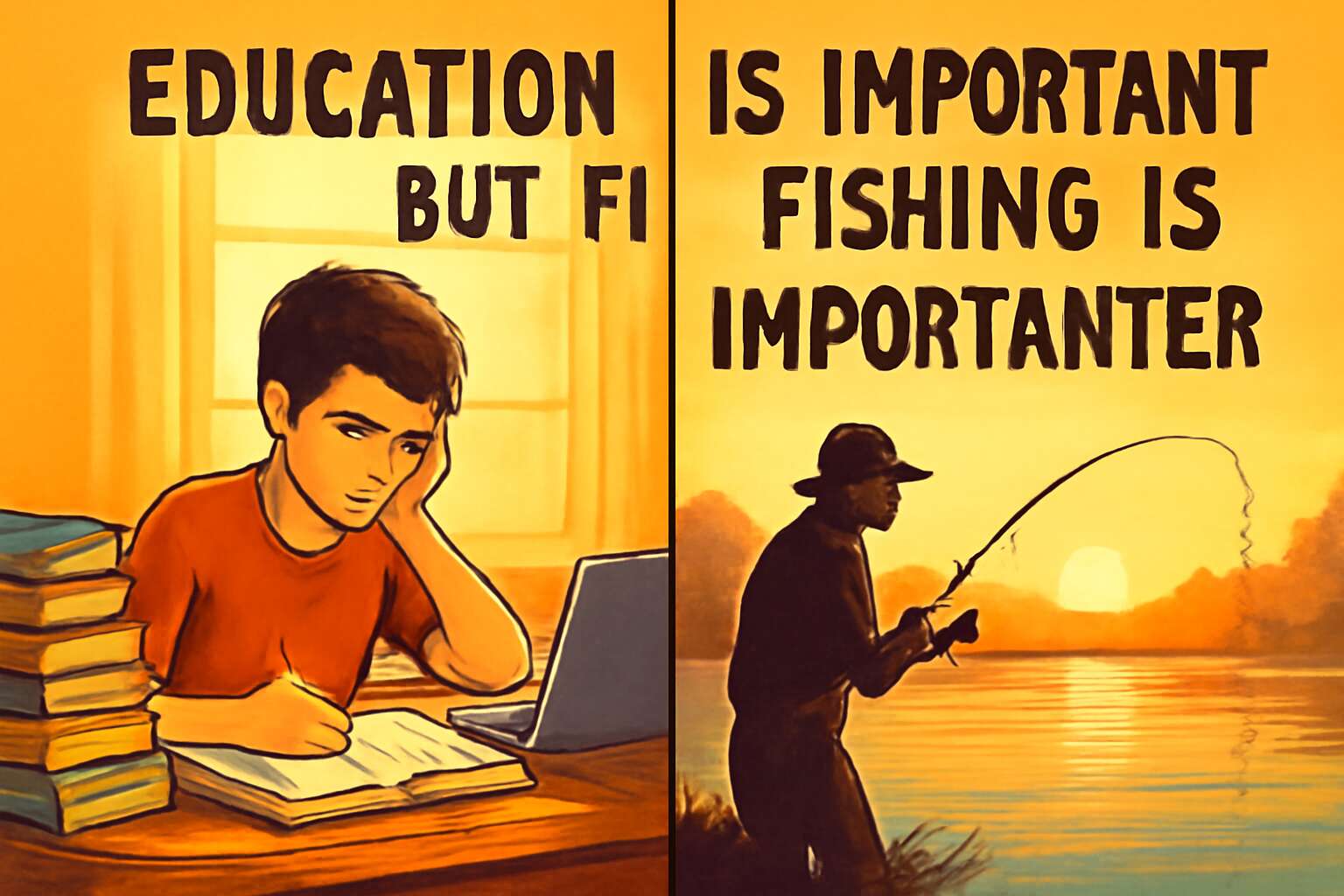
Balancing Education and Fishing: A Practical Perspective
The Role of Education in Everyday Decisions
The dawn river glows with possibility: education opens doors, yet the sea asks questions no textbook can answer. In South Africa, 74% of young people balance study with practical passions, a tug that runs from Cape Town’s docks to the quiet farms along the coast. I’ve watched this pull in classrooms and on boats, and the water seems to tilt toward curiosity, guiding daily decisions with a hint of something almost supernatural.
- Plan study blocks that align with seasonal fishing windows
- Turn field observations into bite-sized assignments
- Treat local waterways as real-world labs for problem-solving
Balancing isn’t about choosing one life; it’s about letting both currents shape you. I’ve learned that in SA towns where river meets reef, curiosity becomes currency and resilience becomes routine. education is important but fishing is importanter.
Learning Through Fishing Activities
At the edge where the harbor fog meets the learning loom of morning, education begins to glow with a salt-wind edge. In the heart of South Africa’s coast towns, I hear a stubborn refrain: education is important but fishing is importanter.
Balancing these pulls isn’t a compromise but a moving seam where questions meet chores. Learning through fishing activities reframes study as a living practice: measurements taken from tides, sketches of boats, and notes on weather become data listening to the coast.
- riverbank journals
- tidal data sketches
- species behavior notes
Such scenes weave resilience into daily decisions, a tide that lifts both mind and hands beyond slogans.
Core Skills That Transfer Between School and the Water
On South Africa’s wind-lashed coast, education and the sea push at the same horizon. Balancing classroom theory with the tide’s tempo isn’t a retreat from learning; it’s a living workshop where questions become practices. In harbor cafés, the refrain—”education is important but fishing is importanter”—hangs in the air, a reminder that real-world skills keep minds and hands sharp together.
Core ideas travel easily from school to shore: measurements become data, sketches map spatial reasoning, and weather notes sharpen judgment under pressure.
- Observation and data tracking
- Teamwork and resource planning
- Adaptability under shifting conditions
These transferable skills, learned in salt spray and chalk dust, shape resilient learners who navigate both classrooms and coastlines with equal confidence.
Myth vs Reality: Do You Have to Choose One?
On South Africa’s wind-swept coast, a sharp line cuts through rumor and routine: “education is important but fishing is importanter.” The phrase gets a laugh, but it hints at a simple truth: learning travels beyond the classroom when the sea is your mentor.
Myth vs Reality: Do You Have to Choose One? The truth is different: you can blend schooling with coastal practice. Here’s the reality in brief:
- Myth: pick one path
- Reality: both worlds reinforce core skills
- Outcome: agility, focus, and teamwork
Field moments sharpen judgment; ideas meet action as measurements, sketches, and weather notes gain polish under pressure. In South Africa, classrooms and harbor benches train the same minds.
The result isn’t a compromise but a spectrum. Education and fishing can share the horizon, turning coastal days into living labs that shape confident learners.
Educational Benefits That Amplify Fishing Enjoyment
Developing Critical Thinking for Safe and Successful Fishing
Early dawn on South Africa’s glistening rivers invites a duel of minds: education and instinct dancing in tandem. A quiet counsel echoes: “Education lights the route; fishing lights the heart.” The river becomes a living syllabus, teaching patience and precision.
Educational benefits amplify fishing enjoyment by refining focus, pattern recognition, and problem-solving. education is important but fishing is importanter. Developing critical thinking for safe and successful fishing means weighing weather, current, gear, and ethics before every cast.
What to cultivate:
- Pattern recognition for water and bait selection
- Risk assessment before every cast
- Ethical decisions around catch and release
Math, Measurements, and Navigation in Angling
Across South Africa’s rivers and coastlines, the dawn drift becomes a small equation: math sharpens timing, measurements sharpen accuracy, and navigation keeps you aligned with the current. Guides note days anchored by careful planning yield noticeably more consistent bites. education is important but fishing is importanter, a wink to how learning fuels instinct when the river is the classroom and the sun is the timer.
Here are focal touches that translate numbers into practice on the water:
- Distances and drift timing: aligning movement with the river’s rhythm to position the lure in the strike zone.
- Depth and lure calibration: translating depth readings and visibility into thoughtful gear choices.
- Chart reading and navigation: listening to maps or GPS guidance to connect spots and plan exits.
The river becomes a living syllabus, turning arithmetic into action and patience into precision. This blend elevates outdoor education, inviting a professional curiosity toward wind, current, and water clarity as you cast with intention.
Career Opportunities Linked to STEM and Fisheries
Across South Africa, a tide of curiosity meets the riverbank, where education is important but fishing is importanter becomes a practical maxim. A compelling stat lands cleanly: learners who connect fieldwork with science report engagement up by 42%. The river teaches resilience, turning mistakes into method as reels hum and questions rise with the dawn.
Educational benefits that amplify fishing enjoyment and open career doors linked to STEM and fisheries bloom where theory meets practice:
- Fisheries biology and conservation careers
- GIS mapping, water quality, and habitat assessment
- Aquaculture technology and data-driven farming
These threads weave a professional curiosity about wind, current, and water clarity into a meaningful vocation, inviting learners to see streams as living labs and the coast as a university in motion.
Time Management and Discipline from School Routines
Rivers echo routines: the dawn chorus, reeds brushing the bank, and the quiet whir of a reel. “education is important but fishing is importanter” — a line that lands with clarity in classrooms and on the riverbank. When lessons meet the water, learning becomes alive. In South Africa, this cadence threads schools, rivers, and coastlines into a shared discipline.
In practice, these routines translate into habits that amplify fishing enjoyment.
- Structured time blocks build punctuality and focus.
- Field notes mirror water observations and tides.
- Feedback with deadlines shapes safety and responsibility.
Beyond the river, these habits slip into study and community life, turning curiosity into method. The river becomes a living lab where learning and fishing reinforce one another. Learning is lived, shared, and patient.
Fishing as a Field Lab: Hands-On Learning Within the Hobby
Ecology and Conservation Through Fishing Practices
In South Africa, field-based learning sticks long after the bell rings: hands-on experiences boost retention by about 60%. education is important but fishing is importanter, some might quip, yet the lure of real-world problems is where real learning begins.
Fishing becomes a field lab: researchers and students test water quality, map micro-habitats, and observe predator-prey dynamics in action. Through fishing practices, ecology and conservation take on urgent, tangible form.
- Habitat mapping and seasonal surveys
- Water quality and sediment testing
- Catch-and-release health observations
Each observation on the water invites reflection about learning, ethics, and stewardship.
Weather, Seasons, and Gear Knowledge
Water teaches in verbs and vowels, turning a classroom into a living map. education is important but fishing is importanter, a refrain that travels from hook to hatch when students see theory light up on the riverbank. In South Africa’s river valleys, this field lab makes weather a tutor, and curiosity a compass guiding every read of the sky and current.
- Weather cues and safety checks
- Seasonal habitat shifts and timing
- Gear choice, maintenance, and contingency planning
Each observation invites reflection on ethics and stewardship; the water becomes a mentor more memorable than any chalkboard.
Economic Literacy from Small Fishing Ventures
Nelson Mandela once framed education as the tool to reshape the world, a banner that lands with salt on riverbank classrooms. In South Africa’s river valleys, fishing doubles as a field lab where learners connect theory to weather, current, and ethics. education is important but fishing is importanter.
Hands-on fishing ventures cultivate economic literacy in plain sight: tracking costs, judging risk, and reading seasonal markets. This isn’t about trophies or textbooks; it’s about turning a simple hobby into a micro‑enterprise with real money on the line.
- Low startup costs and local partnerships
- Cash flow awareness from catch-and-sell cycles
- Regulatory literacy and sustainable practice as core habit
Across South Africa’s small rivers, the field lab stays stubbornly practical, teaching resilience, judgment, and civic stewardship under open skies.
Problem-Solving on the Water
In South Africa’s river bends, a boat becomes a classroom with the same thrill as a science fair but with spray. Fishing as a field lab turns weather, current, and ethics into a compact curriculum that moves—literally—under open skies. education is important but fishing is importanter, some say with a wink, until you see how a simple cast reveals patterns, risks, and responsible habits in real time.
- Real-time feedback loops between observation and decision-making
- Cross-disciplinary thinking that fuses biology, meteorology, and ethics
- Community stewardship as an everyday habit
Hands-on problem-solving on the water doesn’t shout from a textbook; it whispers through decisions, measurements, and teamwork as the sun tracks the horizon. The field lab stays practical, friendly to novices and stubbornly rigorous for the curious, proving that learning can be portable, participatory, and surprisingly persuasive.
Community and Mentorship in Fishing Clubs
Across South Africa’s river bends and fishing clubs, a simple cast becomes a lesson in patience and pattern recognition. Field labs on the water turn weather and current into a practical syllabus, with the river itself as a patient mentor. education is important but fishing is importanter.
Hands-on learning thrives in buoyant communities where newcomers and seasoned anglers trade tips under an open sky. Here, the shoreline becomes a classroom without walls, and the hobbyist spirit evolves into real problem-solving skills.
- Water quality checks with simple test kits
- Knots, casts, and current-reading skills
- Ethical catch-and-release decisions that protect future seasons
Mentorship in fishing clubs is the coastline that anchors curiosity. Veterans guide beginners through gear choices, seasonal tactics, and local ecology, weaving safety and stewardship into daily practice. This quiet mentoring translates into life skills that ripple beyond the water and bind community and craft.
Education, Policy, and Local Communities in Fisheries
Education Policy’s Impact on Local Fishing Economies
Across South Africa’s coastal towns, education reshapes the rhythm of the tide. When schooling meets seaworthy know‑how, families ride out lean seasons with steadier income and safer nets. A well‑educated crew translates classroom discipline into on‑water patience, weather sense, and careful gear handling that keeps boats afloat longer than most catches do!
Policy frames this fusion by funding training hubs, apprenticeships, and certification that sea‑wise youngsters can display with pride. In halls of government, a wry maxim—”education is important but fishing is importanter”—surfaces now and then to remind officials to balance theory with harvests that actually move the dial.
Local communities benefit when schools collaborate with fishing clubs, coastguard programs, and co‑ops.
- Local apprenticeships pairing classrooms with on‑water mentors
- Flexible schedules that align with fishing cycles
- Recognition of informal learning and micro‑credentials
Thus the coastlines read both the syllabus and the swell.
Career Pathways in Marine Science and Aquaculture
Education opens doors in marine science and aquaculture across South Africa’s coast, turning classroom curiosity into hatchery hygiene, data logging, and field sampling skills. Students learn to read sea conditions, manage broodstock, and chart environmental impact. “education is important but fishing is importanter.”
Policy acts as the bridge, funding training hubs, apprenticeships, and certification that sea‑wise learners can display with pride. Government and funders encourage partnerships between schools, fishing clubs, and coastguard programs to keep local labor anchored in the fishery economy.
Local communities knit together education, policy, and practice through mentorship and real‑world projects along the shoreline. Flexible schedules, community labs, and micro-credentials connect students to jobs in marine science and aquaculture without losing sight of tradition.
- Coastal apprenticeship pipelines that pair classrooms and docks
- On-site hatchery rotations and field-work placements
- Community science projects feeding local fishery data
Youth Programs Linking Classroom Lessons with Field Work
Coastal classrooms along South Africa’s coast hum with salt air and serious ambition. When theory meets tide, learning becomes practice, turning curiosity into hatchery hygiene, data logging, and field sampling skills. “education is important but fishing is importanter,” a wry refrain heard in youth clubs, reminding where passion must meet discipline and craft.
Policy acts become the bridge, funding training hubs, apprenticeships, and certification that sea-wise learners wear with pride. Government and funders encourage partnerships between schools, fishing clubs, and coastguard programs to keep local labor anchored in the fishery economy.
Local communities knit education, policy, and practice through mentorship and real-world projects along the shoreline. Flexible schedules, community labs, and micro-credentials connect learners to jobs in marine science and aquaculture without losing sight of tradition.
- Coastal apprenticeship pipelines
- On-site hatchery rotations
- Community science projects
Certifications for Safety and Compliance in Fishing Trades
Along South Africa’s coast, fisheries certifications weave safety into daily practice. Education, policy, and local wisdom guide learners from classroom spark to deck-ready skills. “education is important but fishing is importanter” — a playfully stubborn reminder to pair passion with rules.
- On-site safety inductions
- Emergency drills
- Recertification and recognition
Policy acts fund training hubs, apprenticeships, and portable credentials that stay with the worker.
Coastal communities tie education, policy, and practice through mentorship and field projects, ensuring local labor stays in the sea economy.