
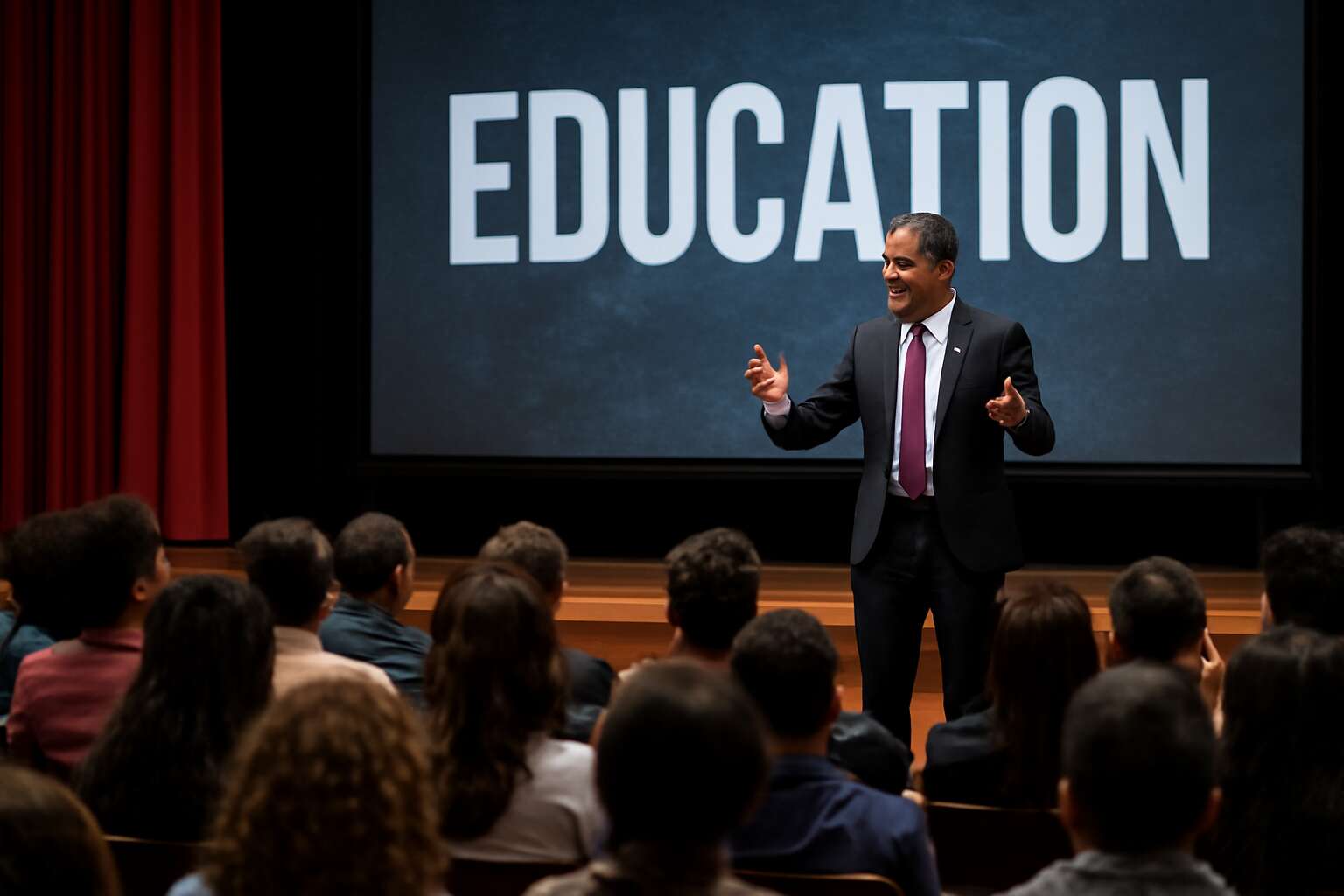
The Importance of Education in Society
Why Education Shapes Futures
Nelson Mandela’s conviction shouts across classrooms: “Education is the most powerful weapon which you can use to change the world.” In South Africa, this truth travels from rural huts to urban schools, turning chalk into catalysts and desks into doorways for opportunity!
Education is a social architecture; it shapes how we think, relate, and participate. When learners grow, communities thrive—cities diversify, economies adapt, and young voices claim space in public life with informed courage.
- Empowers critical thinking and adaptable problem-solving
- Fosters civic participation and social cohesion
- Drives innovation, economic mobility, and global competitiveness
In this education is important speech, we witness how knowledge migrates across generations, turning aspirations into concrete paths—from skilled trades to STEM leadership—without erasing culture or memory.
Across South Africa’s landscape, education holds a mirror to inequities and a ladder to possibility, inviting every learner to contribute to a more just, creative society.
Education and Economic Opportunity
In South Africa, education is important speech—heard in classrooms, townships, and boardrooms as theory becomes practice and purpose becomes plan. Global research suggests that each additional year of schooling can lift lifetime earnings by about 10%, a statistic that lands with clarity in every learner’s corridor. Education, then, is less a credential than a compass guiding communities toward opportunity and responsibility.
When education aligns with local needs, it unlocks economic opportunity and social mobility. It creates a skilled workforce that can adapt to a fast-changing economy, from renewable energy to digital services. Consider these pathways:
- Expanding access to skilled trades and STEM leadership
- Fostering entrepreneurial thinking and local enterprise
- Bridging regional inequities through portable credentials
Beyond wallets, education shapes civic life—encouraging participation, resilience, and shared memory. In South Africa, classrooms become meeting places where knowledge meets compassion, turning possibility into responsibility and culture into momentum.
Education and Social Equality
Education is the passport to the future, for tomorrow belongs to those who prepare for it today. In South Africa, this passport is stamped in classrooms, townships, and boardrooms, where ambition meets discipline and purpose becomes policy.
Education is important speech, a living claim that schooling is not a privilege but a shared duty. Education shapes social equality by widening opportunity, building shared norms, and inviting every voice to participate.
- Removing barriers to access in underserved communities
- Investing in teachers and culturally relevant curricula
- Expanding support networks that keep students through graduation
Beyond personal growth, education binds communities, forging resilience and mutual accountability. Such work demands patience and courage; education is the shared weather that allows communities to endure and thrive.
Education and Civic Engagement
“Education is the most powerful weapon which you can use to change the world,” Mandela reminded us, and in South Africa that weapon is often forged in classrooms, clubs, and council chambers. When education becomes a civic habit rather than a spreadsheet exercise, people show up—at school boards, at local elections, at community meetings. The idea that education is important speech is not a trope; it’s a social contract that invites every voice to participate and keeps public life from becoming a whispering gallery of the already privileged.
Education fuels society and civic engagement by teaching critical thinking, empathy, and how to hold power to account.
- Informed participation in elections and policy debates
- Volunteer leadership and community organizing
- Longer collective resilience through shared norms
Lifelong Learning as a Core Value
Education is the lantern that pierces South Africa’s night skies, and lifelong learning is a core value that keeps its flame alive. “Education is the passport to the future, for tomorrow belongs to those who prepare for it,” a call I hear in every classroom, library, and workplace. When learning grows into a habit rather than a checkbox, people show up—at workshops, in community centers, and in council chambers—ready to shape the next chapter.
Education fuels a resilient society by turning curiosity into skill, skepticism into discernment, and pain into progress. Lifelong learning invites citizens to navigate change, mentor others, and sustain democratic dialogue. In towns from Gauteng to the Karoo, accessible programs—from local reading circles to online courses—lift communities toward shared norms and enduring hope; the idea that education is important speech echoes in township halls and council chambers.
Key Elements of a Powerful Education Speech
Clear Purpose and Message
Education is the most powerful weapon you can use to change the world. Across South Africa, a powerful education speech must carry a clear purpose and a living, human message. The idea that education is important speech finds a voice in classrooms and boardrooms alike, nudging conversations toward possibility!
- Clear purpose and a concise message
- Relatable stories, precise evidence, and vivid imagery
- Cadence, rhythm, and a memorable, hopeful close
Authenticity travels farther than ornate prose. In SA’s mosaic of learners, the best speeches listen as much as they speak, inviting audiences to imagine futures where education lights the way for every child and every community. Even in tough moments, eloquence with clarity can steady hands and lift eyes toward promise.
Compelling Opening and Hooks
Education is the most powerful weapon you can use to change the world. The line travels from Cape Town’s sunlit classrooms to rural township halls, stirring belief that every learner can rise. Like a lantern in a long SA night, it guides distant futures toward dawn.
An opening should seize the room with a vivid image—a learner stepping into a sunlit corridor, a bus horn in the distance, futures blooming. Ground the moment in three hooks: a relatable story, precise evidence, and vivid imagery. The phrase education is important speech can knit hope to policy.
- Relatable opening story with clear stakes
- Precise evidence connected to local life
- Cadence that lingers after the room empties
A memorable close lands with a drumbeat of possibility: short sentences, rising tempo, and a hopeful invitation that education remains a shared promise across South Africa.
Evidence, Data, and Examples
Across South Africa, a single chart can tilt destinies with the swagger of a Cape Town breeze. Globally, each extra year of schooling lifts earnings by about 10%, a stat that travels from Cape Town classrooms to rural halls with refreshing speed. The phrase “education is important speech” anchors claims in human-scale purpose and proven outcomes.
- Local evidence: attendance trends, literacy gains, and dropout hotspots that illuminate the real world
- Reliable data sources: matric results, district dashboards, and program evaluations that withstand scrutiny
- Concrete, relatable examples: mentor programs, school partnerships, and community-driven interventions that spark visible change
In practice, craft the argument with a cadence that echoes beyond the hall: crisp sentences, a rising tempo, and a hopeful invitation that education remains a shared promise across South Africa.
Audience-Centric Language and Tone
A powerful education speech moves with the listener, not at them. Audience-centric language honors South African realities—from classroom chalk to community halls—and adapts cadence to keep pace with attention, not bore it. education is important speech serves as a northern star, linking purpose to tangible outcomes while weaving storytelling with data so numbers feel human and possible to every farmer, nurse, and learner in towns.
- Audience-specific language that respects local idioms and realities
- Cadence that mirrors real speech—short bursts and longer, reflective sentences
- Empathy that connects personal stories to shared goals
In practice, the room becomes a cooperative space where learning feels possible.
Structure, Flow, and Transitions
Powerful education speeches in South Africa move with the room, weaving purpose into everyday voices. The structure feels natural and human, turning a classroom chalkboard into a map for communities. education is important speech glows as a guiding constellation—visible in farm gates, clinic wards, and school halls—when content flows with truth, rhythm, and empathy.
- Clear arc that threads purpose with stories
- Cadence that alternates brisk beats and reflective pauses
- Signposts and transitions that guide listeners smoothly
- Human examples that anchor data in everyday life
This sequence of structure, flow, and transitions invites learners to lean in, see themselves in the story, and move forward with confidence.
Strategies for Writing an Education Speech
Research and Data Sources
“Education is the most powerful weapon which you can use to change the world,” Mandela reminds us, and in South Africa that weapon still gleams in classrooms. I hear that loom of possibility, this education is important speech, spoken with cadence and care, inviting listeners to feel the dream and the duty of every learner.
Strategies for writing such speeches hinge on clarity, credibility, and cadence. I begin with reliable sources to anchor claims, then map data to human impact.
- Government statistics and ministry reports
- UNESCO Institute for Statistics
- World Bank education data
- Local school dashboards and surveys
Triangulate by weaving official numbers with independent studies and the voices of teachers and parents, always noting date and context so conclusions stay grounded in reality.
I hope the narrative lingers in the room and in readers’ minds.
Stories and Case Studies That Inspire
A single story can multiply the impact of a hundred figures—a striking stat that engagement soars when data is paired with narrative. In South Africa’s classrooms and communities, every anecdote about a learner’s grit becomes a bridge to policy and practice.
Structure a speech as a journey: set a clear aim, draw on local voices, and anchor claims with trusted data. Use concrete scenes—a mentor’s quiet guidance, a late-night homework session, a first exam triumph—to invite listeners to feel change take root. This is where education is important speech finds its rhythm—balancing credibility with heart.
- Highlight a real learner’s arc to illustrate broader outcomes
- Weave official numbers with teacher and parent perspectives
- Pause with sensory details to sharpen cadence
Rhetorical Techniques for Persuasion
The phrase ‘education is important speech’ can be a lighthouse in South Africa’s classrooms, guiding listeners through data, memory, and shared purpose. Build ethos by lifting local voices—teachers, learners, parents—and spark pathos with concrete scenes. Ground every claim (logos) in trusted figures and outcomes.
- Ethos: credible local voices.
- Pathos: sensory scenes of study.
- Logos: data-backed claims.
Structure your rhetoric with a quiet arc: a clear aim, a human moment, a data touchstone. Use cadence to sharpen impact—short commands, longer reflections—so listeners feel change approaching through a mentor’s guidance, a late-night study, a first exam triumph.
Let local voices do some of the talking; let sensory detail carry the room; let a question linger to invite responsibility. In South Africa, education is a shared backbone of opportunity and dignity.
Inclusive Language and Ethical Framing
Speaker’s hook: “Education is the most powerful weapon which you can use to change the world.” In shaping an education is important speech, aim for a quiet arc: a clear aim, a human moment, a data touchstone. Ground every claim in local voices—teachers, learners, parents—and let concrete scenes kindle pathos. Ethos, then logos, guide the way with trusted outcomes.
Strategies for inclusive language and ethical framing center on three pillars:
- Use inclusive language that respects identity and culture.
- Frame claims ethically, with consent, dignity, and context.
- Ground messages in local data and trusted outcomes from SA schools.
Maintain cadence: short commands, longer reflections; the room leans toward change through a mentor’s guidance and a late-night study, a first exam triumph. Let sensory detail carry the room and let a question linger, inviting responsibility. In South Africa, education is a shared backbone of opportunity and dignity!
Calls to Action and Next Steps
Across South Africa, 60% of learners say education shapes opportunity, a truth that lands like a drumbeat in a school hall. In shaping education is important speech, the arc remains quiet: a clear aim, a human moment, and a data touchstone that guides the room.
Anchor calls to action in images of daily life—teachers guiding late-night homework, learners collaborating after class, parents listening at kitchen tables. Next steps unfold as enduring commitments in communities, not checklists; ethos and concrete outcomes linger, inviting responsibility rather than shouting.
Maintain cadence with short commands and longer reflections, letting a mentor’s warmth steer the audience toward lasting change. In South Africa, education is a shared backbone of opportunity and dignity!
Editing, Revisions, and Feedback
In classrooms across South Africa, 60% of learners say education shapes opportunity, a drumbeat that echoes through every hopeful speech. The strongest education is not just facts but the feeling that belongs in a room—where questions spark, and every seat believes it matters.
Strategic editing turns rough drafts into a compass. When crafting an education is important speech, start with a clear aim, then test rhythm, tone, and relevance against real learners and teachers.
Here are edits that help the piece travel well:
- Clarity and cadence checks that align language with audience comprehension
- Feedback loops from diverse readers to surface blind spots
- Revisions that tighten examples without dulling voice
Keep sections human, polish transitions, and let genuine moments guide conclusions. A well-edited speech invites responsibility and wonder in every classroom corner of South Africa.
Delivery Techniques for Education Speeches
Voice Modulation, Pace, and Pauses
A powerful delivery can turn an ordinary speech into a turning moment for learners. As Nelson Mandela reminded us, ‘Education is the most powerful weapon which you can use to change the world.’ When the topic is education is important speech, voice modulation becomes the instrument that carries conviction and hope.
These delivery elements shape the moment:
- Voice modulation reveals warmth and conviction, guiding emotion through pitch and cadence.
- Pace and pauses create room for ideas to breathe and land.
- Rhythm and emphasis let key phrases breathe with deliberate timing.
In rural and urban classrooms alike, this careful crafting makes education real, not distant, turning data into a shared moment. That education is important speech can slide from the podium into everyday conversation, and I speak from the heart about the beauty of learning and the power of every child to rise!
Body Language and Presence
A striking stat anchors this moment: 82% of learners remember material better when the speaker projects confident presence. Delivery for education speeches hinges on body language and presence that radiate care and conviction. This education is important speech lives not only in data, but in steady gaze and warm tone.
Body language and presence are instruments, not props. A balanced posture, relaxed shoulders, and grounded feet become an unspoken premise for trust. Eye contact maps the room; gestures illustrate meaning rather than fill air.
From rural classrooms to urban campuses in South Africa, presence has the power to turn numbers into belonging. When delivery carries room for listening, learners lean in; when it does not, data drifts away.
Using Visual Aids Effectively
Delivery shines when visuals carry weight and tenderness, turning classrooms into shared voyages. For education is important speech, visuals are grammar that anchors meaning beyond the numbers. In fact, 82% of learners remember material better when the speaker projects confident presence. In South Africa’s diverse classrooms, high-contrast slides with clean typography guide attention, while imagery of local life makes complex ideas suddenly intimate. Lean visuals—maps, photos, simple diagrams—support the message without drowning it, inviting every learner to lean in and listen with care.
- High-contrast slides
- Minimal text per slide
- Concise data annotations
- Local-context imagery
Pair visuals with a measured tempo and clear cadence, allowing slides to illuminate rather than overwhelm. The most effective delivery uses light and gaze, a calm, inclusive tone, and a rhythm that invites dialogue—so the message becomes a shared journey rather than a solitary recital.
Handling Questions and Objections
When a hall settles into a hush, the cadence with which a speaker handles questions can redefine the room as a learning forum. In South Africa’s diverse classrooms, 82% of learners remember material better when the speaker projects confident presence. education is important speech: an invitation to turn questions into shared inquiry rather than a moment of retreat.
- Active listening etched in gaze and tone
- Clarification before reply to prevent misreadings
- Reframing objections as openings for deeper understanding
A calm tempo, consistent eye contact, and a humane, inclusive voice let questions do the heavy lifting.
Rehearsal Strategies and Timing
In South Africa’s classrooms, 82% of learners remember material better when the speaker projects confident presence. That spark turns a talk into a learning moment, where ideas land with clarity and energy.
Delivery is a craft; education is important speech thrives on timing, rhythm, and crisp structure.
Rehearsal rotates around a simple tempo map, not a boilerplate script.
- Measured tempo and narrative punctuation
- Reflective playback for tone and clarity
- Cadence that mirrors audience pace
- Presence and movement that support the message
From Cape Town to Polokwane, the room responds when timing feels human, not robotic.
Real-World Applications and Case Studies
School-Based Programs and Outcomes
Across South Africa’s diverse classrooms, Real-World Applications take root as curiosity translates into problem-solving. In after-school hubs and school-based clubs, learners prototype solutions to local challenges, from water conservation to budgeting for school events. A recent study shows programs that connect learning to community needs boost engagement by about 25% and improve persistence. These gains feel tangible—bright futures unfolding in every corridor and playground alike.
- Community tutoring and peer mentoring that raises reading levels
- Hands-on STEM labs aligned with local industry needs
- Work-based learning and micro-internships for older students
Outcomes ripple beyond grades, shaping families and local economies. As one mentor often says, ‘education is important speech’—a banner carried from chalkboards to council chambers. In South Africa, these stories translate into practical confidence, workplace readiness, and civic participation that lasts a lifetime.
Community and Nonprofit Initiatives
Real-world applications anchor learning in South Africa’s neighborhoods, where after-school hubs stitch curiosity into problem-solving. In collaborations with local nonprofits, learners prototype solutions to water scarcity and budgeting for school events that truly matter to their communities. As one mentor often says, education is important speech—carried from chalkboards to council chambers.
Community and nonprofit case studies reveal how these ideas take root: sustained tutoring networks lift literacy, maker-space collaborations spark practical STEM thinking, and youth-led projects turn local challenges into teachable moments.
These efforts ripple beyond grades, strengthening families and energising local economies as confidence swells, pipelines to work open, and communities find a common language for progress.
Policy and Advocacy Speeches
In South Africa, classrooms become incubators for policy as much as for algebra. Real-world applications in policy and advocacy turn lessons into streets’ conversations, guiding reform with evidence and heart. education is important speech, carried from chalkboards to council chambers, shaping budgets and bylaws with civic rhythm.
Case studies show after-school tutoring networks that lift literacy, and youth-led briefs that influence municipal plans. These efforts ripple into families and towns, enlarging opportunity and trust.
- District forums that translate learner data into budget decisions
- Maker-space collaborations that steer STEM toward local needs
- Youth-led policy briefs presented to councils and committees
Policies born here become visible, durable bridges between classrooms and communities.
Student and Teacher Voices
Education is a powerful chorus, and education is important speech travels from chalkboards to council chambers, shaping budgets and bylaws with civic rhythm. In South Africa, real-world classrooms host debates that pair data with lived experience, turning lessons into actionable reform.
Student and teacher voices drive tangible change. Learners share successes and gaps; educators pair classroom stories with evidence, building credibility. This voice is not abstract—it moves into after-school tutoring networks, youth-led briefs, and community forums that translate school outcomes into local priorities.
Here are concrete forms this influence takes:
- Students co-design community learning labs that align with local needs
- Teachers document outcomes and mentor portfolios that policymakers consider
- Youth leaders present briefs to councils, shaping planning and oversight
The ripple is visible: classrooms sparking dialogue that informs budgets, reporting, and civic accountability.
Measuring Impact and Success Metrics
In South Africa, the real-world impact of education is important speech takes form as classrooms become laboratories for change. Across townships and suburbs, school data feeds into council budgets and improvement plans. This phrase anchors conversations where learning outcomes translate into transport, tutoring, and support services communities actually feel!
- Attendance and retention trends
- Matric pass rates and subject gains
- After-school tutoring reach and completion
Measuring impact hinges on tangible metrics and credible narratives gathered from pilots and districts. These indicators feed into dashboards used by school committees and local councils, turning chalkboard lessons into accountable budgets and transparent reporting.
Case studies across Cape Town and KwaZulu-Natal show dashboards and stories converting school outcomes into planning and funding decisions, proving that the idea translates into practical reform when data meets community voice.